The American economy stands at a pivotal juncture, a moment fraught with both promise and peril. Emerging from the whirlwind of a global pandemic, supply chain collapses, and the highest inflation in four decades, the United States is now navigating one of the most complex economic environments in modern history. The path forward is bifurcated between two starkly different outcomes, each with profound implications for every household, business, and investor.
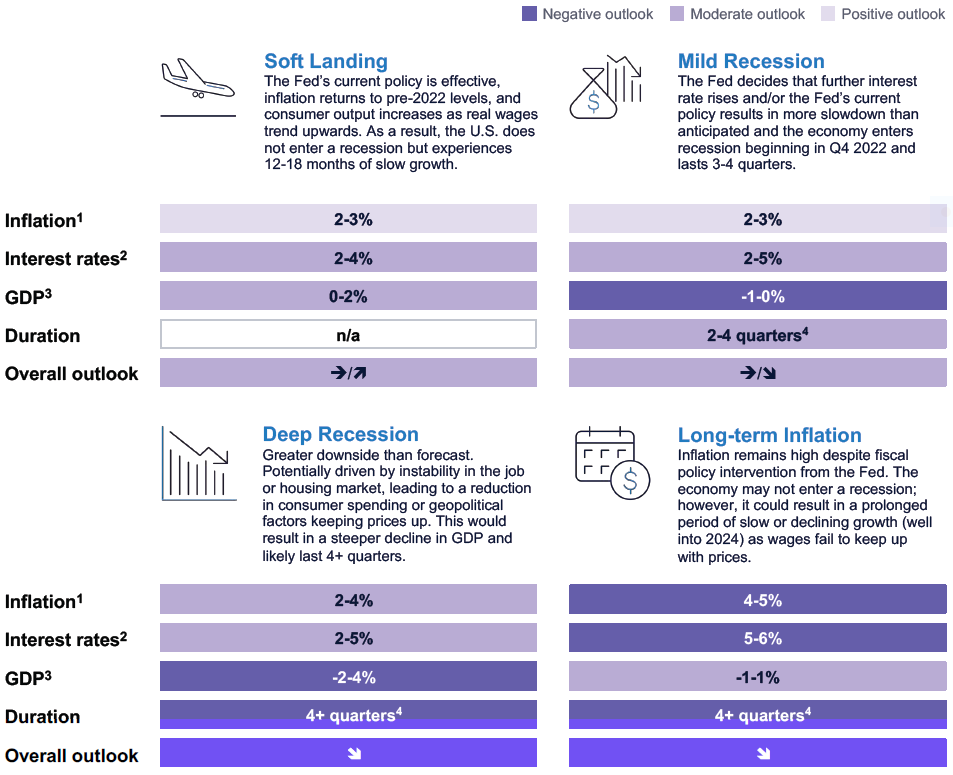
On one side shines the optimistic prospect of a “soft landing”—a scenario where the Federal Reserve successfully tames inflation through interest rate hikes without triggering a significant recession or a sharp rise in unemployment. It is the economic equivalent of a surgical procedure, a delicate maneuver long sought but rarely achieved.
Lurking in the shadows, however, is the grim specter of “stagflation”—a portmanteau of stagnation and inflation. This condition, last experienced in the 1970s, describes a toxic combination of stubbornly high prices, stagnant or declining economic output, and rising unemployment. It is an economic manager’s nightmare, as the tools to fight inflation (higher rates) can worsen stagnation, and the tools to fight stagnation (stimulus) can fuel inflation.
The central question for 2024 and beyond is: Which path is the US economy on? This article will dissect the competing forces, analyze the current data through the lens of economic expertise, and provide a nuanced outlook for the future. We will move beyond the headlines to explore the underlying dynamics of the labor market, consumer resilience, geopolitical risks, and the long-term structural shifts that will define the American economy for years to come.
Part 1: The Case for a Soft Landing – A Triumph of Policy and Resilience
The argument for a soft landing has gained substantial credibility throughout 2023 and into 2024. Several key indicators and developments suggest that the US economy is on a path to normalizing without a severe downturn.
1.1 Disinflationary Progress: A Clear, if Bumpy, Trend
The most compelling evidence for the soft landing narrative is the significant progress made on inflation. After peaking at 9.1% in June 2022, the Consumer Price Index (CPI) has fallen dramatically. While the journey down has been uneven, the trend is unmistakable.
This disinflation has been driven by several factors:
- The Unwinding of Supply Chains: The historic bottlenecks that drove up prices for goods like cars and appliances have largely dissolved. Global supply chains are now operating at normal or even below-normal levels of stress, allowing goods inflation to cool substantially.
- The Fed’s Aggressive Monetary Policy: The Federal Reserve’s rapid-fire interest rate hikes, from near-zero to a 5.25%-5.50% target range, have been the primary tool for cooling demand. By making borrowing more expensive for consumers and businesses, the Fed has successfully tempered the white-hot demand that characterized the 2021-2022 period.
- Re-balancing of the Labor Market: The post-pandemic labor shortage, which drove wage growth to multi-decade highs, has eased. Job openings have declined from their stratospheric peaks, and the ratio of openings to unemployed persons has normalized, reducing upward pressure on wages without causing mass layoffs.
1.2 The Resilient Labor Market: The Bedrock of the Economy
The US labor market has repeatedly defied predictions of a sharp downturn. The unemployment rate has remained at or below 4%, a historically low level that points to a still-robust economy. This strength is crucial for a soft landing for several reasons:
- Sustained Consumer Spending: The American consumer is the engine of the US economy, accounting for nearly 70% of GDP. As long as the vast majority of people who want jobs have them, and wages are growing (albeit at a more moderate pace), consumer spending is likely to remain resilient. This provides a floor under economic growth, preventing a contraction.
- The “Full Employment” Mandate: The Fed has a dual mandate: stable prices and maximum employment. The persistence of a strong labor market gives the Fed confidence that its rate hikes have not yet broken the economy, allowing it to be patient and data-dependent rather than panicking and reversing course prematurely.
1.3 Robust GDP and Consumer Momentum
Despite high interest rates, economic growth has remained positive. The US economy expanded at a solid pace in 2023, defying widespread predictions of a recession. This resilience is rooted in:
- Healthy Household Balance Sheets: Many households entered this period of high inflation and rates with significant savings buffers accumulated during the pandemic, thanks to government stimulus and reduced spending opportunities. This has allowed them to continue spending even as prices rose.
- Strength in Specific Sectors: While interest-rate-sensitive sectors like housing and manufacturing have slowed, the services sector—encompassing everything from travel and dining to healthcare and entertainment—has remained strong. This sectoral rotation has helped overall GDP avoid a downturn.
1.4 The “Immaculate Disinflation” Narrative
This combination of falling inflation, low unemployment, and continued growth has been dubbed an “immaculate disinflation” by some economists. It suggests that the Fed may have engineered a near-perfect policy outcome. The core of this argument is that the post-pandemic inflation was largely driven by unique, transitory shocks (supply chains, energy prices due to the Ukraine war) that are now reversing, while the underlying structure of the economy remains sound.
Part 2: The Case for Stagflation – Gathering Storm Clouds
For all the optimism surrounding the soft landing, a compelling counter-narrative warns of a return to 1970s-style stagflation. This view points to several persistent and emerging risks that could derail the recovery and create a far more challenging economic environment.
2.1 Sticky and Persistent Core Inflation
While headline inflation has fallen, the decline in core inflation (which excludes volatile food and energy prices) has been slower and more stubborn. Core CPI remains well above the Fed’s 2% target. This stickiness is concerning because it reflects inflationary pressures that are more deeply embedded in the economy, primarily through:
- Services Inflation: The cost of services—shelter (rent), healthcare, education, insurance, and personal care—continues to rise at a brisk pace. Services inflation is highly correlated with wage growth, and because services are more labor-intensive and less exposed to global competition, they are much harder for the Fed to tame without causing a significant slowdown in employment.
- Wage-Price Spiral Risks: Although wage growth has moderated, it is still running above levels consistent with the Fed’s 2% inflation target. If workers continue to demand higher pay to keep up with the cost of living, and businesses continue to raise prices to cover higher labor costs, a self-reinforcing wage-price spiral could take hold, making inflation far more difficult to eradicate.
2.2 Geopolitical Fragmentation and Supply-Side Shocks
The global economy is undergoing a profound structural shift from globalization to fragmentation. Events like the war in Ukraine, tensions with China, and attacks on shipping in the Red Sea are not temporary blips but symptoms of a new, less stable world order. These developments create persistent supply-side inflation that monetary policy is poorly equipped to handle.
- De-globalization and Re-shoring: The push for supply chain resilience and national security is leading companies to move production out of low-cost centers like China to more expensive, friendly countries or back to the US. While beneficial for long-term security, this process, known as re-shoring or friend-shoring, is inherently inflationary, as it raises production costs.
- Commodity Price Volatility: The energy transition, coupled with geopolitical instability, creates a fertile ground for volatile commodity prices. OPEC+ production decisions, conflicts in the Middle East, and climate-related disruptions to agriculture can cause sudden spikes in food and energy prices, which then feed into broader inflation expectations.
2.3 The Lagged Effects of Monetary Policy
The full impact of the Fed’s interest rate hikes has likely not yet been felt. Monetary policy operates with “long and variable lags,” often taking 12 to 18 months to fully work its way through the economy. The potential consequences are significant:
- Corporate Debt Refinancing Wall: Many companies took on cheap debt during the era of near-zero interest rates. As this debt matures and needs to be refinanced at much higher rates, corporate profit margins will be squeezed. This could lead to a wave of cost-cutting, reduced investment, and layoffs in 2024 and 2025.
- The Commercial Real Estate Crisis: This sector is particularly vulnerable. High interest rates, combined with a permanent shift toward remote work that has hollowed out office demand, have created a severe crisis for commercial real estate (CRE). Widespread defaults on CRE loans could pose a significant risk to regional banks, potentially triggering a credit crunch that would stifle economic growth.
2.4 Declining Productivity and Structural Headwinds
Long-term structural issues also feed the stagflation narrative. Productivity growth—the key to rising living standards without inflation—has been anemic. An aging population is slowing labor force growth, putting upward pressure on wages. Massive government debt levels limit the capacity for further fiscal stimulus without fueling inflation. These factors create a low-growth backdrop that is more susceptible to inflationary shocks.
Part 3: A Nuanced Outlook – The Most Likely Scenarios for 2024 and Beyond
Given these powerful, competing forces, a binary “soft landing vs. stagflation” framework is too simplistic. The reality is likely to be messier and fall somewhere in between. Here are the most probable scenarios, ranked by likelihood.
Scenario 1: The “Bumpy Landing” (Highest Probability)
This is the most probable outcome—a successful, but imperfect, soft landing. In this scenario, the US economy avoids a formal recession, but growth slows to a below-trend pace (well under 2%) for an extended period.
- Inflation settles above the Fed’s 2% target, perhaps in the 2.5%-3.5% range, forcing the central bank to hold interest rates “higher for longer” than the markets currently expect.
- The Labor Market softens, with the unemployment rate rising to the 4.5%-5.5% range. This creates some economic pain and a “vibe-cession” where aggregate data looks okay, but public sentiment remains sour due to higher costs of living and a less certain job market.
- The Fed’s Dilemma: The Fed declares a conditional victory, pausing rate hikes but being very slow to cut, carefully balancing the risks of re-igniting inflation against the risks of overtightening.
This “bumpy landing” is essentially a mild form of stagflation—slower growth with inflation still lingering—but it stops short of the severe pain of the 1970s.
Scenario 2: The “No Landing” (Moderate Probability)
In this surprising but plausible scenario, the economy re-accelerates. Strong consumer spending, a resilient labor market, and potential fiscal stimulus (e.g., in an election year) cause growth to pick up again, reigniting inflationary pressures.
- The Conundrum: This would be the worst-case scenario for the Federal Reserve. It would force them to resume hiking interest rates, likely pushing the economy into a more deliberate and deeper recession in 2025 to finally crush inflation. A “no landing” is, therefore, often a precursor to a “hard landing.”
Scenario 3: The “Hard Landing” / Mild Recession (Moderate Probability)
The lagged effects of monetary policy finally bite hard. The corporate debt refinancing wall and the commercial real estate crisis trigger a credit event, leading to a spike in unemployment and two consecutive quarters of negative GDP growth.
- The Fed’s Response: A recession would likely crush inflation quickly. This would allow the Fed to pivot sharply and cut interest rates to stimulate the economy. The recession, while painful, would be relatively short-lived, setting the stage for a new recovery cycle.
Scenario 4: True Stagflation (Lower Probability)
This is the true nightmare scenario, where a supply-side shock (e.g., a major escalation in the Middle East that sends oil to $150/barrel) hits while inflation is still sticky. The Fed, its credibility on the line, feels compelled to keep rates high to anchor expectations, thereby deepening the recessionary impact of the shock. This combination of soaring prices and rising unemployment is the classic stagflation trap, and it would be exceptionally difficult to escape.
Read more: From Dashboards to Decisions: The Next Frontier of Data Visualization for American Teams
Part 4: Long-Term Structural Shifts – The Forces Shaping the Next Decade
Beyond the cyclical outlook for 2024, powerful structural forces will shape the US economy for the next decade.
- The Green Transition: The massive investment in climate technology and renewable energy is a double-edged sword. In the short term, it can be inflationary as it demands huge capital expenditure and competes for scarce resources. In the long term, it could be disinflationary by creating energy independence and more efficient systems.
- Artificial Intelligence (AI) and Productivity: AI has the potential to unleash a productivity boom unlike any since the 1990s internet revolution. If realized, this could be the ultimate antidote to stagflation, allowing for stronger growth with less inflation. However, the timing and magnitude of this impact are highly uncertain, and the transition could be disruptive to labor markets.
- Geopolitical Realignment: The era of hyper-globalization is over. The new paradigm of “friend-shoring” and economic security will lead to higher costs but potentially greater resilience. Navigating this shift without triggering a sustained inflationary wave is a key challenge for policymakers.
- The Debt Overhang: With US federal debt exceeding $34 trillion, the country’s fiscal trajectory is unsustainable. Higher interest rates mean a larger portion of the federal budget goes to servicing this debt, crowding out other spending and creating a persistent source of potential instability.
Conclusion: Navigating the Uncertainty
The US economic outlook for 2024 and beyond is one of exceptional uncertainty. The triumphant narrative of a soft landing is plausible, given the remarkable resilience displayed so far. However, it is far from guaranteed. The risks of a bumpy landing, a re-acceleration of inflation, or even a mild recession are substantial.
The path forward will be determined by the interplay between three key actors: the Federal Reserve, which must walk a monetary policy tightrope; US consumers, whose spending will ultimately determine the depth of any downturn; and global events, which can deliver inflationary shocks beyond the Fed’s control.
For individuals and businesses, the prudent course is to prepare for volatility and a “bumpy landing” scenario. This means strengthening balance sheets, avoiding excessive debt, and maintaining flexibility. While the specter of stagflation is a real risk, it is not the most likely outcome. The more probable future is one of slower growth, higher interest rates than the post-2008 norm, and a constant battle against persistent, albeit lower, inflation. The “soft landing” may not be perfectly soft, but with careful navigation and a dose of luck, the US economy can avoid the hard ground of a deep recession and the quagmire of true stagflation.
Read more: Python vs. R for Data Analysis: Which Skill is More Valuable for US Jobs?
Frequently Asked Questions (FAQ)
Q1: What exactly is the difference between a “soft landing” and a “recession”?
A: A soft landing refers to the Federal Reserve successfully slowing down the economy just enough to bring inflation back to its 2% target without causing a significant rise in unemployment or negative economic growth. A recession is typically defined as two consecutive quarters of declining Gross Domestic Product (GDP), accompanied by a significant rise in unemployment and a broad-based contraction in economic activity. A soft landing avoids this contraction.
Q2: I keep hearing about “core inflation.” Why is it more important than the regular inflation number?
A: Headline inflation (like the CPI) includes all items, including the volatile food and energy sectors. Prices for these can swing wildly due to weather, geopolitics, or OPEC decisions, masking the underlying trend. Core inflation strips these out, giving a clearer view of the more persistent, domestically generated inflation driven by services and wages. The Fed pays close attention to core measures to gauge the true, long-term inflationary pressure in the economy.
Q3: If we avoid a recession, why does the economy still feel so bad to many people?
A: This is the concept of a “vibe-cession.” While aggregate data like GDP and unemployment might look healthy, individuals feel the pinch of higher prices (inflation has cumulatively increased costs by over 18% since 2020) and higher interest rates (making mortgages, car loans, and credit card debt more expensive). Even if you have a job, your purchasing power may have declined, and financial stress has increased, creating a disconnect between the macroeconomic data and personal experience.
Q4: What are the biggest risks that could push the US into stagflation?
A: The primary risk is a major, sustained supply-side shock, particularly in the energy market. For example, a major escalation of conflict in the Middle East that severely disrupts oil production could send gasoline and energy prices soaring. If this happens while core services inflation remains sticky, it would create the worst-of-both-worlds scenario: rising prices and a growth slowdown. A resurgence of a wage-price spiral would also significantly increase the risk.
Q5: How could Artificial Intelligence (AI) affect this economic outlook?
A: AI is a major wild card. In a positive scenario, AI could trigger a massive productivity boom, allowing companies to produce more goods and services with less labor input. This would boost economic growth (fighting “stagnation”) while simultaneously helping to control costs and wages (fighting “inflation”). However, if the adoption of AI leads to widespread job displacement before new roles are created, it could exacerbate unemployment and income inequality, worsening the “stagnation” side of the equation.
Q6: What does “higher for longer” mean for interest rates, and how does it affect me?
A: “Higher for longer” refers to the expectation that the Federal Reserve will keep its benchmark interest rate elevated for an extended period, rather than cutting it quickly. This means:
- Borrowers will face high costs for mortgages, car loans, and credit card debt.
- Savers will continue to earn more attractive interest on savings accounts and certificates of deposit (CDs).
- Businesses will find it more expensive to finance expansion, which could slow hiring and investment.
The Fed’s goal with this policy is to ensure inflation is thoroughly defeated and does not come roaring back.
Q7: Is the US government’s high debt level a problem right now?
A: It is a growing medium-to-long-term risk. When interest rates were near zero, servicing the debt was cheap. Now, with rates high, the interest payments on the national debt are becoming one of the largest line items in the federal budget. This “crowds out” spending on other priorities like defense, infrastructure, or social programs and could eventually force difficult choices between austerity (spending cuts/tax hikes) or potentially inflationary money-printing. For now, the US’s unique position as the issuer of the world’s reserve currency gives it breathing room, but the trajectory is unsustainable.