For decades, the guiding principle of American investing was singular and seemingly incontrovertible: maximize shareholder returns. This fiduciary duty, famously articulated by Milton Friedman, created a financial ecosystem laser-focused on profit. But a profound shift is underway. A growing cohort of investors, asset managers, and corporate leaders now believe that long-term value creation is inextricably linked to a company’s impact on the world. This philosophy is encapsulated in the acronym ESG: Environmental, Social, and Governance.
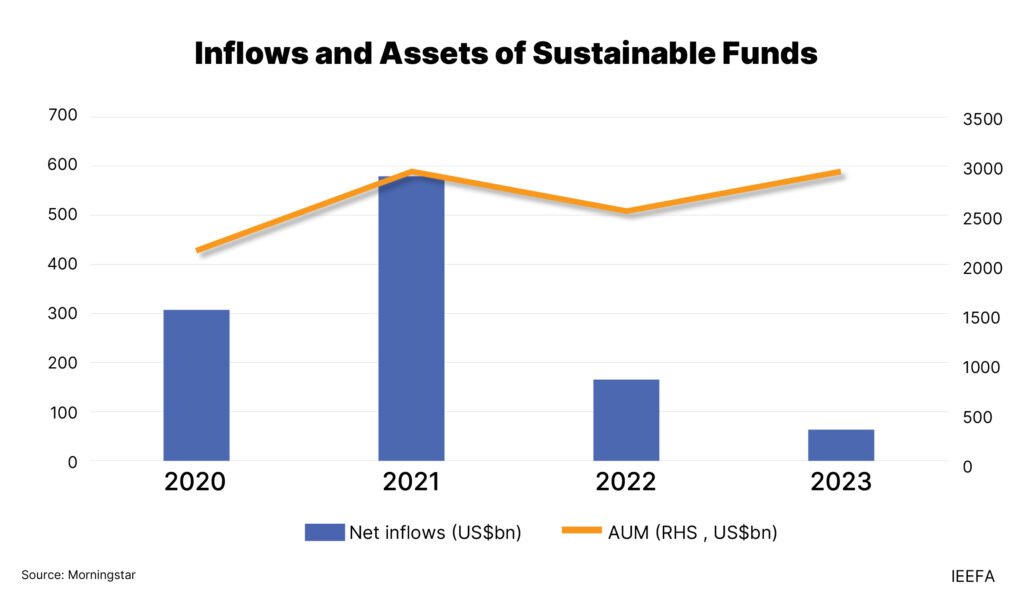
What began as a niche strategy for ethically-minded investors has exploded into a mainstream financial movement. In the United States, this surge is most visible in the rapid growth of Exchange-Traded Funds (ETFs) that integrate ESG criteria. These funds promise a compelling dual mandate: to generate competitive financial returns while fostering positive change.
But this raises critical questions that every modern investor must grapple with: Does this “do-good” approach come at a financial cost? Can sustainable ETFs truly compete with, or even outperform, their traditional, non-ESG counterparts? What unique risks do they carry, and how do they behave in different market conditions?
This article delves deep into the performance and risk profile of US-listed sustainable ETFs, pitting them against traditional benchmarks like the S&P 500. We will move beyond the hype and the skepticism, grounding our analysis in empirical data, financial theory, and a clear-eyed assessment of the evolving regulatory landscape. Our goal is to provide a authoritative, evidence-based resource for investors seeking to align their portfolios with their values without sacrificing financial rigor.
Part 1: Deconstructing ESG – More Than Just “Feeling Good”
Before analyzing performance, it’s crucial to understand what we’re measuring. ESG is often conflated with its predecessor, “Socially Responsible Investing” (SRI), which primarily used negative screens to exclude “sin stocks” like tobacco, firearms, or gambling. ESG is a more sophisticated, forward-looking, and integrated framework.
The Three Pillars of ESG:
- Environmental: This criteria assesses a company’s impact on the planet. It includes its carbon footprint, climate change policies, energy efficiency, water usage, waste management, pollution, and how it manages environmental risks and opportunities across its supply chain.
- Social: The “S” focuses on a company’s relationships with its people and the community. Key factors include labor standards, employee diversity, equity, and inclusion (DEI), customer satisfaction, data privacy and security, human rights record, and impact on local communities.
- Governance: Often considered the foundational element, governance pertains to the internal systems and controls that guide a company. This encompasses board diversity and structure, executive compensation, shareholder rights, business ethics, transparency, and anti-corruption policies.
In the US market, ESG ETFs utilize a variety of strategies to implement this framework:
- Negative/Exclusionary Screening: The traditional SRI approach, excluding companies or industries based on specific ESG criteria.
- Positive/Best-in-Class Screening: Selecting companies that outperform their sector peers on ESG metrics.
- ESG Integration: Systematically and explicitly including ESG factors into traditional financial analysis.
- Impact Investing: Targeting investments specifically aimed at generating measurable, positive social or environmental impact alongside a financial return.
- Thematic Investing: Focusing on specific ESG themes, such as clean energy, water sustainability, or gender diversity.
Leading providers like iShares (BlackRock), Vanguard, and State Street have developed a suite of ETFs that employ these strategies, offering investors everything from broad, ESG-screened US market exposure to highly targeted thematic funds.
Part 2: The Performance Debate – Evidence from the Front Lines
The central question for any investor is performance. For years, the prevailing assumption was that ESG investing necessitated a “green premium” – you paid for your principles with lower returns. The data, however, tells a more nuanced and increasingly compelling story.
Historical Performance Analysis: Keeping Pace and Often Outperforming
Multiple studies and analyses over the past decade have challenged the performance penalty narrative.
- Academic Research: A seminal 2015 meta-study published in the Journal of Sustainable Finance & Investment, which analyzed over 2,000 individual studies, found that the vast majority showed a non-negative relationship between ESG and financial performance, and a large proportion showed a positive one. The theory is that strong ESG practices can be a proxy for high-quality, forward-thinking management, which often leads to operational efficiency, innovation, and better risk management.
- The COVID-19 Stress Test: The market volatility induced by the COVID-19 pandemic provided a real-time case study. Numerous analyses, including one from BlackRock, found that sustainable funds demonstrated greater resilience during the Q1 2020 market downturn. The hypothesis is that companies with robust stakeholder relationships (strong “S” and “G”)—such as loyal employees, resilient supply chains, and high customer trust—were better equipped to navigate the unprecedented disruption.
- Direct ETF Comparisons: Let’s examine some concrete examples of large US-listed ESG ETFs against their traditional benchmarks over a multi-year period (data as of late 2023):
- iShares ESG Aware MSCI USA ETF (ESGU) vs. SPDR S&P 500 ETF Trust (SPY)
- ESGU: Tracks an index that includes companies with strong ESG ratings while maintaining a similar risk and return profile to the parent index (the MSCI USA Index).
- Performance: Over a 5-year period, ESGU has performed remarkably in line with, and at times slightly exceeded, the returns of the S&P 500. It captures the vast majority of the market’s upside while being slightly less exposed to controversial industries.
- Vanguard ESG U.S. Stock ETF (ESGV) vs. S&P 500
- ESGV: Employs a broad exclusionary screen, removing companies involved in adult entertainment, alcohol, tobacco, weapons, fossil fuels, and gambling, and those with poor ESG ratings.
- Performance: Like ESGU, ESGV has demonstrated competitive, market-like returns over a multi-year horizon. Its diversified approach avoids heavy sector bets, allowing it to closely track the broader market’s performance.
- Thematic Outperformers: Certain thematic ESG ETFs have significantly outperformed. For instance, ETFs focused on clean energy or disruptive technology (often tied to environmental solutions) experienced massive growth during the bull market of 2020-2021, though they have also demonstrated higher volatility.
- iShares ESG Aware MSCI USA ETF (ESGU) vs. SPDR S&P 500 ETF Trust (SPY)
Explaining the Performance: Why ESG Might Not Mean Underperformance
The historical data suggests that ESG ETFs have, at a minimum, kept pace. There are several financial theories to explain this:
- Risk Mitigation: Companies with poor environmental records face regulatory fines and cleanup costs. Those with weak governance are prone to scandals and corruption. Those with poor social practices suffer from high employee turnover and reputational damage. ESG analysis helps identify and avoid these “headline risks,” leading to a less volatile portfolio over the long term.
- Driver of Growth and Efficiency: Energy-efficient operations lower costs. A diverse and inclusive workforce attracts top talent and fosters innovation. Strong customer relationships drive brand loyalty. These are not just “soft” factors; they are hardwired to a company’s bottom line and long-term growth prospects.
- Capitalizing on Megatrends: The global transition to a low-carbon economy is arguably the largest capital reallocation in history. ESG funds are inherently positioned to capitalize on this and other social megatrends, such as the focus on data privacy and human capital management.
Part 3: A Deeper Dive into Risk – The Unique Profile of Sustainable ETFs
While performance has been competitive, the risk profile of an ESG-focused portfolio is distinct from a traditional one. Understanding these risks is paramount for effective portfolio construction.
1. Sector Biases and Concentration Risk
ESG screening inherently creates sector tilts. By underweighting or excluding the fossil fuel industry, ESG ETFs are significantly underweight the Energy sector. Conversely, they are often overweight Technology and Healthcare, as these sectors typically score well on ESG metrics (particularly governance and innovation). This can be a source of both outperformance (if Tech leads the market) and underperformance (if Energy rallies strongly, as it did in 2022).
2. “Greenwashing” Risk
This is perhaps the most significant and widely discussed risk in ESG investing. Greenwashing occurs when a fund or company overstates or misrepresents its ESG credentials. With no single, universally accepted standard for what constitutes an “ESG” investment, some funds may use the label loosely. An investor might believe they are investing in a portfolio of climate champions, only to find it contains companies with questionable environmental or social records. This risk erodes trust and can lead to reputational and financial damage if holdings are implicated in a scandal.
3. Regulatory and Political Risk
The ESG landscape in the USA is politically charged. On one hand, the Securities and Exchange Commission (SEC) is moving towards stricter disclosure rules, particularly around climate risk. This regulatory push could benefit truly sustainable companies. On the other hand, a political backlash has emerged, with several states proposing or enacting laws that restrict or penalize financial institutions for using ESG factors, arguing it represents a “woke” agenda that undermines fiduciary duty. This political uncertainty creates a volatile operating environment for ESG funds.
4. Liquidity and Valuation Risk
While the largest ESG ETFs like ESGU and ESGV are highly liquid, many smaller, thematic sustainable funds are not. This can lead to wider bid-ask spreads and potential difficulty entering or exiting a position, especially during market stress. Furthermore, the immense popularity of ESG has driven up valuations for some “ESG darlings,” potentially creating a bubble in certain segments of the market.
Read more: How To Build a Personal Brand Online From Scratch
Part 4: The Evolving Landscape – Data, Regulation, and the Future
The future of ESG investing in the US hinges on overcoming its current challenges, primarily through better data and clearer regulation.
- The Data Problem: The lack of standardized, mandatory, and audited ESG disclosure is a major hurdle. Different rating agencies (MSCI, Sustainalytics, etc.) use different methodologies, leading to wildly divergent scores for the same company. An investor might see a company rated ‘AA’ by one provider and ‘C’ by another. This makes true apples-to-apples comparisons difficult.
- The Regulatory Response: The SEC’s proposed climate disclosure rules are a game-changer. They would require public companies to disclose climate-related risks and their greenhouse gas emissions. This will dramatically improve the quality and consistency of environmental data, empowering investors and fund managers to make more informed decisions and reducing the scope for greenwashing.
- The Rise of Impact Measurement: The next frontier is moving beyond risk mitigation to measurable impact. Investors are increasingly asking not just “what risk does climate change pose to my portfolio?” but also “what impact is my portfolio having on climate change?” New frameworks and technologies are emerging to quantify the real-world outcomes of sustainable investments.
Conclusion: A Strategic Allocation, Not a Sacrifice
The evidence is clear: the long-held belief that sustainable investing requires a financial sacrifice is largely a myth. A well-constructed portfolio of US-listed ESG ETFs has demonstrated a robust ability to compete with, and in certain contexts even outperform, traditional benchmarks over multiple market cycles.
The key for investors is to approach ESG with the same rigor applied to any investment decision. This means:
- Looking Under the Hood: Don’t just trust the “ESG” label. Scrutinize the fund’s methodology, its holdings, its provider, and the specific indices it tracks.
- Understanding the Risk Profile: Acknowledge the inherent sector biases and ensure your overall portfolio is appropriately diversified.
- Defining Your Own “Why”: Are you seeking to avoid specific risks, align with personal values, or drive measurable impact? Your objective will determine which ESG strategy is right for you.
ESG is not a fleeting trend. It represents a fundamental evolution in how we define corporate value and fiduciary duty in the 21st century. For the American investor, sustainable ETFs offer a powerful, accessible, and financially viable tool to build a portfolio that is not only positioned for long-term growth but is also resilient and responsible. The choice is no longer between values and value; it is about recognizing that in today’s world, they are increasingly one and the same.
Read more: U.S. GDP Trends and Stock Market Growth Correlation: Understanding the Link in 2025
Frequently Asked Questions (FAQ)
1. I’ve heard that ESG funds perform worse than the S&P 500. Is this true?
Historically, this has not been the case for broad-based US ESG ETFs. While there can be periods of underperformance—for example, when the Energy sector surges—long-term, multi-year studies and the track records of major funds like ESGU and ESGV show performance that is highly competitive with, and often nearly identical to, the S&P 500. The narrative of consistent underperformance is not supported by the aggregate data.
2. What’s the difference between an ESG ETF and a traditional index ETF?
A traditional index ETF, like one tracking the S&P 500, holds a basket of stocks designed to mirror the composition and performance of that index, with no ethical or sustainability filters. An ESG ETF applies a secondary layer of analysis. It will either exclude certain industries (e.g., fossil fuels, weapons) or select companies based on their performance across environmental, social, and governance criteria, resulting in a portfolio with a different composition and risk profile.
3. How can I avoid “greenwashed” ESG funds?
To mitigate greenwashing risk, take these steps:
- Check the Holdings: The simplest method. Look at the fund’s top 25 holdings. Do the companies align with your understanding of ESG?
- Read the Methodology: The fund’s prospectus and fact sheet will explain its ESG strategy. Does it use exclusionary screens? Does it rely on a specific ratings provider?
- Research the Provider: Look into the asset manager’s reputation and commitment to ESG. Do they have their own stewardship guidelines? Are they signatories to initiatives like the Principles for Responsible Investment (PRI)?
- Use Third-Party Resources: Websites like Morningstar provide “Low Carbon” and “Sustainable Investing” badges and ratings for funds, offering an independent assessment.
4. Are ESG ETFs more expensive than traditional ETFs?
There is often a small premium. The average expense ratio for a broad US ESG ETF might be around 0.15% – 0.20%, compared to 0.03% – 0.09% for a giant like VOO (Vanguard S&P 500 ETF). This is due to the additional research and data costs associated with ESG analysis. However, this fee gap has been narrowing significantly as the market matures and assets under management grow.
5. With the political backlash against “woke capitalism,” is ESG investing too risky?
The political debate introduces a layer of uncertainty, but it’s important to distinguish political rhetoric from financial materiality. The core drivers of ESG—climate risk, human capital management, board accountability—are financially material issues that affect company performance regardless of political opinion. A well-diversified ESG strategy focused on these material factors is designed to be resilient across political cycles. The backlash primarily creates headline risk for specific funds in specific states, but it does not invalidate the underlying financial rationale.
6. Can ESG ETFs really make a difference, or am I just making myself feel better?
This is a valid question. The mechanism for impact is twofold:
- Capital Allocation: By directing capital towards companies with stronger ESG practices, you are increasing their cost of capital and making it cheaper for them to grow. Conversely, you are withholding capital from companies with poor practices.
- Shareholder Advocacy: Large ESG ETF providers like BlackRock and Vanguard use their massive voting power as shareholders to file and support resolutions on climate change, diversity, and other ESG issues. By investing in their funds, you are indirectly amplifying their voice and ability to influence corporate behavior. The collective action of millions of investors is what drives systemic change.