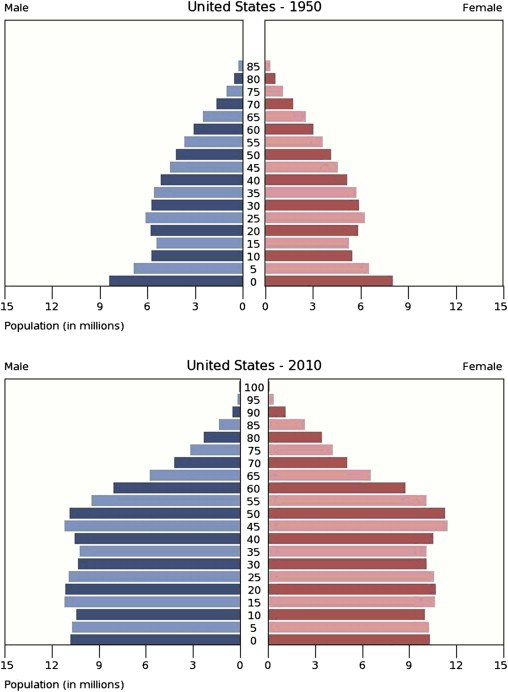
The famous phrase “demographics is destiny,” often attributed to Auguste Comte, suggests that the structure of a population can determine its future. In the context of the US economy and equity markets, few destinies are as clearly charted as the aging of the Baby Boomer generation. Born between 1946 and 1964, this cohort of over 73 million people began turning 65 in 2011, and this wave will continue for the next decade.
Consider these pivotal data points from the US Census Bureau and the Administration for Community Living:
- By 2030, all Baby Boomers will be over 65, and this age group will expand to comprise nearly 21% of the total US population, up from 16% in 2020.
- The 85+ population is projected to nearly double from 6.7 million in 2020 to 12.7 million by 2040.
- Healthcare spending is inherently age-correlated. Individuals aged 65 and over account for a disproportionately large share of national health expenditures. While they represent 16% of the population, they account for over 34% of total US healthcare spending.
This demographic reality translates into a powerful, multi-decade demand driver for a wide range of goods and services. Unlike fleeting consumer fads or cyclical tech trends, the need for healthcare, pharmaceuticals, and supportive living arrangements for seniors is non-discretionary and inelastic. This creates a defensive bedrock for investment portfolios while also offering significant growth runways for well-positioned companies.
This article will serve as a comprehensive guide for analyzing the equity opportunities within this theme. We will dissect the sector into three primary pillars:
- Medical Necessities: The foundational layer, encompassing companies providing essential drugs, devices, and care.
- Senior Living & Care Models: The physical and service-based infrastructure for an aging population.
- Enabling Technology & Specialty Services: The innovative solutions driving efficiency and improving outcomes.
For each, we will outline the investment thesis, key players, financial metrics to watch, and inherent risks.
Pillar 1: Medical Necessities – The Core Portfolio Foundation
This pillar represents the most direct and non-discretionary exposure to the aging demographic. Demand for these products and services is driven by the increasing prevalence of chronic conditions such as cardiovascular disease, diabetes, osteoarthritis, and age-related vision issues.
1.1 Pharmaceuticals (Big Pharma & Specialty Biopharma)
Thesis: An aging population directly increases the consumption of prescription drugs. Chronic disease management requires long-term, often daily, pharmaceutical regimens. Companies with strong portfolios in cardiology, metabolic disease, oncology, and neurology are particularly well-positioned.
Key Players & Strategies:
- Diversified “Big Pharma” (e.g., Pfizer, Merck, Johnson & Johnson, Eli Lilly): These companies offer a defensive profile through diversified revenue streams across multiple therapeutic areas. The key is to analyze their drug pipelines for products targeting age-related diseases. For instance, Eli Lilly’s massive success with GLP-1 drugs for diabetes and obesity (Mounjaro, Zepbound) is a direct play on metabolic syndromes prevalent in older adults.
- Specialty Biopharma (e.g., Amgen, Regeneron, Vertex): These firms often focus on high-cost, complex therapies for specific conditions. Regeneron’s Eylea, for treating age-related macular degeneration (AMD), is a prime example of a blockbuster drug with a clear demographic driver.
Financial Metrics & Analysis Framework:
- Pipeline Strength: The lifeblood of any pharma company. Assess the phase III and newly launched drugs targeting age-related illnesses.
- Patent Cliff Exposure: Determine when key blockbuster drugs lose patent protection and face generic competition. A robust pipeline is essential to offset this revenue loss.
- Free Cash Flow Generation: Strong cash flows enable funding for internal R&D, strategic acquisitions, and consistent dividend payments, a hallmark of the sector.
- P/E Ratio vs. Growth Rate: Compare the company’s Price-to-Earnings ratio to its expected earnings growth (PEG ratio) to assess relative valuation.
Primary Risks: Intense regulatory scrutiny from the FDA; pricing pressures from Medicare Part D and Pharmacy Benefit Managers (PBMs); political risks around drug pricing legislation; high R&D costs with no guarantee of success.
1.2 Medical Devices & Diagnostics
Thesis: As the population ages, the incidence of procedures like joint replacements, cataract surgery, and cardiac interventions rises significantly. Companies manufacturing the implants, surgical tools, and diagnostic equipment for these procedures are direct beneficiaries.
Key Players & Strategies:
- Orthopedics (e.g., Stryker, Zimmer Biomet): These companies specialize in hip, knee, and shoulder replacements. The procedure volume is highly correlated with the 65+ demographic. Stryker has also excelled by integrating robotics (Mako system) into surgery, improving outcomes and creating a durable competitive moat.
- Cardiology (e.g., Medtronic, Abbott Laboratories, Boston Scientific): They produce pacemakers, stents, catheters, and ablation systems. An older population means a higher rate of arrhythmias and coronary artery disease.
- Diagnostics (e.g., Danaher, Thermo Fisher Scientific): Through their subsidiaries (e.g., Beckman Coulter at Danaher), these companies provide the vast array of instruments and reagents used in clinical labs to diagnose and monitor chronic diseases.
Financial Metrics & Analysis Framework:
- Procedure Volume Growth: Track industry data on procedure volumes for joint replacements, cardiac surgeries, etc.
- Pricing Power & Market Share: Analyze the company’s ability to maintain or increase prices, often through product innovation (e.g., robotic-assisted surgery).
- Recurring Revenue Stream: A critical differentiator. Companies with a high mix of consumables and service contracts (e.g., reagents for diagnostic machines) exhibit more predictable revenue than those reliant solely on capital equipment sales.
- Gross Margin Trends: Indicates manufacturing efficiency and pricing power.
Primary Risks: Reimbursement pressure from Medicare; procedure volume volatility during economic downturns or pandemics; product liability and recall risks.
Pillar 2: Senior Living & Care Models – The Infrastructure of Aging
This pillar encompasses the real estate and service providers that house and care for seniors as they transition through different stages of aging and acuity.
2.1 Real Estate Investment Trusts (REITs)
Thesis: Senior housing REITs own the physical properties and lease them to operators, providing investors with a real asset-backed income stream typically characterized by high dividend yields. The demand for these properties is directly linked to demographic trends.
Key Sub-Sectors & Operators:
- Independent Living (IL) & Assisted Living (AL): These communities cater to seniors who need minimal to moderate assistance with daily activities (ADLs). It is a play on private-pay demand, often driven by desire for community and convenience.
- Key REITs: Ventas, Welltower, Healthpeak Properties.
- Skilled Nursing Facilities (SNFs): These provide 24/7 medical care for patients recovering from hospital stays or with significant medical needs. Their revenue is heavily reliant on government reimbursement (Medicare and Medicaid).
- Key REITs: Omega Healthcare Investors.
- Medical Office Buildings (MOBs): A less direct but highly stable play. MOBs are outpatient clinics often located near hospitals, housing the physicians who serve the aging population.
- Key REITs: Healthpeak Properties, Physicians Realty Trust.
Financial Metrics & Analysis Framework:
- Funds From Operations (FFO) and Adjusted FFO (AFFO): This is the most important metric for REITs, replacing EPS. AFFO represents the cash flow available for dividends.
- Dividend Yield and Payout Ratio: Assess the sustainability of the dividend by comparing it to AFFO (payout ratio should be comfortable, e.g., <85% for most).
- Occupancy Rates & Same-Store NOI Growth: Core indicators of operational health. Rising occupancy and Net Operating Income signal strong demand and pricing power.
- Balance Sheet Strength: Debt-to-EBITDA ratios and fixed charge coverage ratios are crucial, as highly leveraged REITs are vulnerable to rising interest rates.
Primary Risks: Interest rate sensitivity (higher rates increase borrowing costs and can make bond yields more attractive relative to REIT dividends); operator risk (if the tenant operator goes bankrupt, the REIT’s income is disrupted); oversupply in certain local markets; labor cost inflation.
2.2 Care Providers & Operators
Thesis: These are the companies that actually run the senior living communities and home health agencies. They manage the staff, resident care, and day-to-day operations, bearing the operational risks and rewards.
Key Models & Operators:
- Public Operators (e.g., Brookdale Senior Living): As the largest pure-play operator, Brookdale provides a direct, albeit operationally intensive, exposure to the IL/AL market. Their performance is highly sensitive to occupancy, rental rates, and labor costs.
- Home Health & Hospice (e.g., Amedisys, Enhabit, Addus HomeCare): This is a high-growth segment driven by the preference for “aging in place” and cost-effectiveness for payors. Care is provided in the patient’s home.
- Investment Appeal: The revenue is largely reimbursed by Medicare, creating a predictable stream. The demographic demand is exceptionally strong.
Financial Metrics & Analysis Framework:
- Revenue per Admission & Total Admissions: Key drivers of top-line growth.
- EBITDA Margin: A measure of operational efficiency. Thin margins can be squeezed by rising wage pressures.
- Organic Growth vs. Acquisition-Led Growth: Assess whether the company is growing by improving its existing operations or primarily through debt-funded acquisitions.
- Quality Metrics: For home health, Medicare’s Star Ratings and Patient Satisfaction scores are critical, as they can impact reimbursement and referral patterns.
Primary Risks: Intense labor pressure and staffing shortages; regulatory changes to Medicare reimbursement rates; high operational leverage (fixed costs remain, so small drops in occupancy hurt profits significantly).
Pillar 3: Enabling Technology & Specialty Services – The Innovation Frontier
This pillar leverages technology and specialized business models to improve care delivery, reduce costs, and capture niche opportunities within the broader demographic theme.
3.1 Healthcare Technology (HealthTech)
Thesis: The US healthcare system is notoriously inefficient. Technology solutions that streamline operations, improve patient engagement, and facilitate data exchange are critical for managing the coming volume of older patients.
Key Areas & Companies:
- Electronic Health Records (EHR) & Data Analytics: EHRs are the digital backbone of modern healthcare.
- Key Player: Cerner (now part of Oracle). Analyzing population health data from EHRs helps identify at-risk seniors and manage chronic diseases more proactively.
- Telehealth: The adoption of virtual care accelerated during the pandemic and remains a vital tool for managing chronic conditions in a home-based setting, especially for seniors with mobility challenges.
- Key Player: Teladoc Health. While facing profitability challenges, its model is aligned with the need for accessible, convenient care.
- Remote Patient Monitoring (RPM): This involves using devices to collect patient data (e.g., blood pressure, glucose levels, weight) remotely and transmit it to clinicians. It is a cornerstone of proactive chronic disease management.
- Key Players: A growing field with both specialized startups and offerings from larger medtech companies.
Financial Metrics & Analysis Framework:
- Revenue Growth & Recurring Revenue Percentage: Look for high growth with a SaaS-like business model.
- Customer Acquisition Cost (CAC) & Lifetime Value (LTV): A crucial ratio for assessing marketing efficiency and long-term profitability.
- Path to Profitability: Many HealthTech firms are growth-focused and not yet profitable. A clear and credible path to positive EBITDA is essential.
- Integration with Existing Systems: A company’s success often hinges on its ability to seamlessly integrate with dominant EHR systems like Epic and Cerner.
Primary Risks: Slow adoption by older demographics and traditional provider organizations; intense competition; data privacy and security concerns; uncertain reimbursement models for new technologies.
3.2 Specialty Services: Pharmacy Benefit Managers (PBMs) & Others
Thesis: While controversial, PBMs are powerful intermediaries in the pharmaceutical supply chain. They manage drug benefits for health plans, including Medicare Part D. Their revenue is tied to the volume of prescriptions processed, which rises with an aging population.
Key Players & Dynamics:
- The “Big Three” PBMs: CVS Health (through Caremark), Cigna (through Express Scripts), and UnitedHealth Group (through OptumRx). These are vertically integrated behemoths.
- The Investment Angle: They provide a less volatile way to play the drug volume trend without taking on the R&D risk of pharma companies. Their business is based on administrative fees, rebates from drug manufacturers, and owning pharmacies.
Financial Metrics & Analysis Framework:
- Prescription Claims Volume: The fundamental top-line driver.
- Gross and Net Profit per Claim: Understanding their profit extraction model.
- Regulatory Scrutiny: This is the single biggest risk. Investors must monitor legislative efforts (e.g., PBM transparency acts) that could compress their profit margins.
Primary Risks: Existential regulatory risk; political backlash over drug pricing; public perception issues.
Read more: Fintech Innovation and Investment Growth in 2025: A New Era of Digital Finance
A Practical Framework for Equity Analysis and Portfolio Construction
Understanding the segments is the first step. The next is applying a disciplined analytical framework to select individual securities.
- Quality Assessment:
- Economic Moat: Does the company have a durable competitive advantage? (e.g., patented drugs, robotic surgery installed base, dense senior housing portfolio).
- Management & Capital Allocation: Is leadership experienced and trustworthy? Do they allocate capital wisely (R&D, smart acquisitions, shareholder returns)?
- Financial Health: Strong balance sheet with manageable debt (review Debt/EBITDA and interest coverage ratios).
- Valuation Analysis:
- Avoid chasing overhyped stories. Use a combination of methodologies:
- P/E and PEG Ratios: Useful for profitable pharma and device companies.
- P/AFFO: The standard for REITs.
- Discounted Cash Flow (DCF): For companies with predictable cash flows.
- EV/EBITDA: Allows for comparison across companies with different capital structures.
- Avoid chasing overhyped stories. Use a combination of methodologies:
- Portfolio Integration:
- Defensive Core vs. Growth Satellite: Use stable, dividend-paying Big Pharma and REITs as a defensive core. Allocate a smaller portion to higher-growth, higher-risk areas like specialized biotech or HealthTech.
- Diversification Within the Theme: Avoid concentrating in a single sub-sector. Hold a basket of pharma, a REIT, and a device company to mitigate company-specific risks.
- ETF Options: For investors seeking immediate diversification, consider ETFs like the iShares U.S. Healthcare Providers ETF (IHF) or the Vanguard Health Care ETF (VHT).
Significant Risks and Headwinds to Monitor
No investment thesis is without risks. The demographic tailwind is powerful, but it is not a guarantee of investment success.
- Regulatory and Reimbursement Risk: The US government, through Medicare and Medicaid, is the largest payer for senior care. Changes in reimbursement rates can immediately impact the profitability of providers, hospitals, and device makers. This is the single most important systemic risk.
- Labor Market Pressures: The healthcare sector is labor-intensive. The aging population is simultaneously shrinking the pool of working-age adults, creating a fierce competition for nurses, aides, and technicians. Wage inflation can severely erode profit margins.
- Economic Cyclicality: While healthcare is defensive, certain segments are not immune to recessions. Private-pay senior housing occupancy can dip, and elective procedures (e.g., joint replacements) may be deferred by consumers facing financial pressure.
- Execution and Integration Risk: Companies that grow through acquisition, common in this sector, face the risk of overpaying or failing to integrate acquisitions successfully.
Conclusion: A Long-Term Compounding Story
The aging of America is a fundamental, long-term trend that offers a compelling roadmap for equity investors. By focusing on the three pillars of Medical Necessities, Senior Living Infrastructure, and Enabling Technology, one can build a resilient portfolio positioned to benefit from this demographic destiny.
The key to success lies in selective, fundamental analysis. The rising tide of demographics will not lift all boats equally. Investors must prioritize companies with wide economic moats, prudent management, strong balance sheets, and reasonable valuations. By doing so, they can harness the power of this multi-decade trend to pursue both capital appreciation and defensive income, turning a societal shift into a strategic investment opportunity.
Read more: ESG in the USA: A Performance and Risk Analysis of Sustainable ETFs vs. Traditional Benchmarks
Frequently Asked Questions (FAQ)
Q1: This seems like a long-term trend. Is it too late to invest?
A: The demographic wave is in its early innings. The peak of the Baby Boomer generation will hit the high-risk 80+ age bracket between 2026 and 2034, meaning demand for complex medical care and supportive living will accelerate for the next decade and beyond. While some stocks may be fully valued, the theme itself has a long runway.
Q2: Which is a better investment: the REITs that own the properties or the companies that operate them?
A: There’s no one-size-fits-all answer, as they offer different risk/return profiles.
- REITs: Generally offer more stable, income-oriented returns through dividends. They have less direct exposure to labor costs and operational inefficiencies but are sensitive to interest rates.
- Operators: Offer higher potential operational leverage (profits can grow faster than revenue if managed well) but carry higher risks related to labor, margins, and execution. They are for investors seeking higher growth and who can tolerate more volatility.
Q3: How do rising interest rates impact this investment theme?
A: It’s a mixed bag. REITs are typically negatively impacted as their borrowing costs rise and their high-dividend yields become less attractive compared to safer bonds. For other companies (pharma, devices), the impact is more nuanced. While higher rates can dampen valuation multiples, their underlying business demand is largely interest-rate insensitive.
Q4: I’m worried about political risk, especially “Medicare for All” or drug price negotiations. How real is this threat?
A: Political risk is a constant in US healthcare. However, sweeping changes like “Medicare for All” face significant legislative hurdles. More immediate are incremental changes, such as the drug price negotiation provisions in the Inflation Reduction Act. The best defense is to invest in companies with innovative pipelines and products that provide undeniable clinical value, making them less susceptible to pure price-based competition.
Q5: Are there any pure-play “geriatric” companies, or are most of these just large healthcare firms with exposure?
A: True pure-plays are rare. Companies like Brookdale Senior Living (operations) or Omega Healthcare (SNF REIT) are very direct. However, most large healthcare companies are diversified. The goal is not to find only pure-plays but to identify companies for which the aging demographic is a primary and sustained growth driver, such as a pharma company with a leading oncology portfolio or a device company dominant in joint replacements.