In the modern economic landscape, data is the new currency. For US enterprises, the ability to harness this resource is no longer a competitive advantage but a fundamental requirement for survival and growth. Yet, many organizations find themselves data-rich and insight-poor. The critical differentiator is not the volume of data collected, but the culture that surrounds it. Building a data-driven culture—where data is the foundational element for decision-making at all levels—is the single most important strategic initiative a company can undertake.
This article serves as a comprehensive blueprint for US enterprises embarking on this transformative journey. We will move beyond theoretical concepts to provide a practical, actionable framework grounded in real-world experience and industry expertise. We will explore the core pillars of a data-driven organization, the common pitfalls that derail progress, and a phased plan for sustainable implementation, all while addressing the unique challenges and opportunities within the American business context.
Part 1: Understanding the Data-Driven Culture
What a Data-Driven Culture Is (And What It Is Not)
A data-driven culture is an organizational environment where empirical data, rather than intuition, hierarchy, or anecdote, is the primary basis for strategic decisions, operational improvements, and daily routines. It is a culture that values curiosity, critical thinking, and evidence-based validation.
What it IS:
- Empowering: It gives every employee, from the C-suite to the front line, the permission and tools to ask questions and seek answers in data.
- Collaborative: It breaks down data silos, fostering cross-functional dialogue grounded in a shared, verifiable truth.
- Iterative: It embraces experimentation and understands that failure, when backed by data, is a learning opportunity, not a punishable offense.
- Transparent: Data, methodologies, and outcomes are accessible and understandable to those who need them.
What it is NOT:
- A Dictatorship of Numbers: It does not eliminate human intuition, creativity, or experience. Rather, it uses data to inform and augment these human qualities. The final decision often still requires judgment.
- An Exclusive “Data Team” Club: A culture where only data scientists and analysts are allowed to interact with data is the antithesis of data-drivenness. This creates a new, more insidious silo.
- A One-Time Project: It is not a software installation or a quarterly initiative. It is a fundamental and permanent shift in organizational mindset and behavior.
- About Having a “Big Data” Platform: Technology is an enabler, not the culture itself. A company can have the most advanced data stack in the world and still be driven by HIPPOs (Highest Paid Person’s Opinion).
The Tangible Benefits for US Enterprises
The impetus for this cultural shift is not merely philosophical; it is intensely practical and financial. For US enterprises operating in a dynamic, competitive market, the benefits are profound:
- Enhanced Competitive Agility: Data-driven companies can spot market trends, consumer sentiment shifts, and competitive moves faster than their peers. They can pivot quickly based on evidence, not guesswork.
- Superior Customer Experience: By analyzing customer behavior, feedback, and journey data, companies can personalize interactions, predict needs, and resolve pain points, leading to increased loyalty and lifetime value.
- Optimized Operational Efficiency: Data reveals inefficiencies in supply chains, manufacturing processes, and resource allocation. Predictive maintenance can prevent downtime, and process mining can identify bureaucratic bottlenecks.
- Driving Innovation: Data analysis can uncover unmet customer needs, identify potential adjacencies for existing products, and validate the potential of new ideas before significant capital is invested.
- Risk Mitigation and Compliance: In an era of increasing regulation (e.g., CCPA, GDPR implications), data-driven processes ensure better monitoring for fraud, cybersecurity threats, and compliance adherence.
- Increased Employee Engagement: When employees are equipped with data, they feel more empowered, accountable, and connected to the company’s mission. Their contributions become more measurable and impactful.
Part 2: The Four Pillars of a Data-Driven Culture
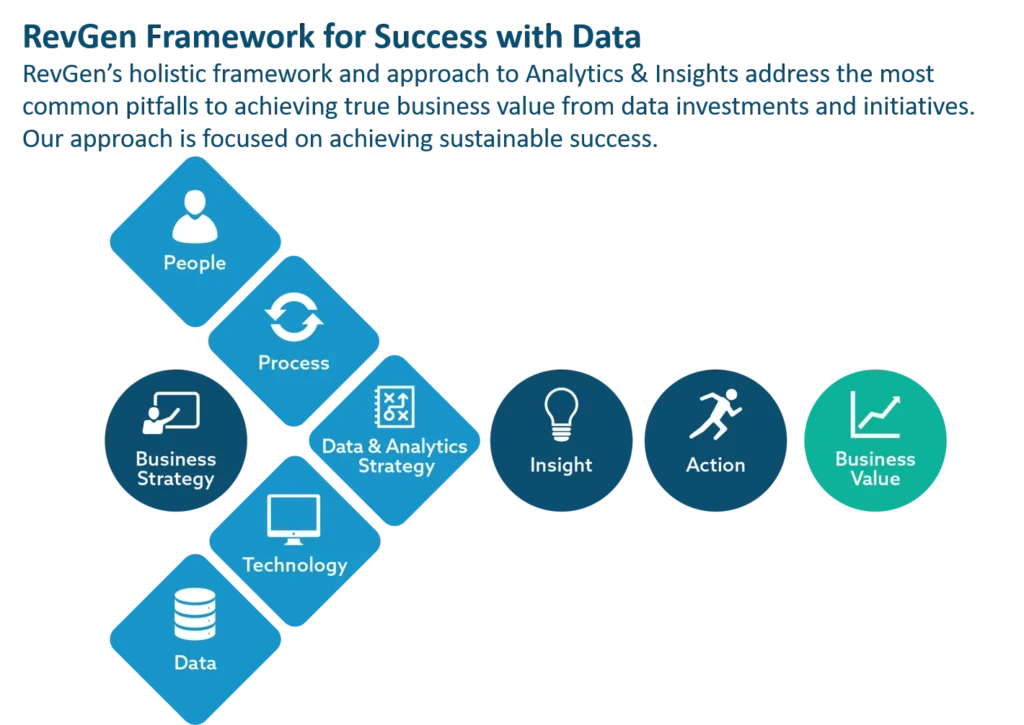
Building a lasting culture requires a foundation supported by four interdependent pillars: Leadership & Strategy, People & Skills, Technology & Infrastructure, and Process & Governance.
Pillar 1: Leadership & Strategy
The transformation must be championed from the top. Without unwavering commitment from the C-suite, any data initiative will falter.
- The CEO as the Chief Data Evangelist: The CEO must articulate a clear and compelling vision for why being data-driven is critical to the company’s future. This goes beyond memos; it must be reflected in their own behavior—citing data in town halls, challenging assumptions with evidence, and rewarding data-informed outcomes.
- Establishing a Clear Data Strategy: This is the “why” and “what” before the “how.” The strategy must answer:
- What are our key business objectives? (e.g., increase market share, improve customer retention).
- What data-driven capabilities do we need to achieve them?
- How will we measure success? (Tying data initiatives to KPIs like ROI, customer satisfaction, etc.)
- Leading by Example: Leaders must visibly change their own decision-making processes. When a senior executive says, “Show me the data,” instead of “I think…,” it sends a powerful message throughout the organization.
- Funding the Transformation: Leadership must be willing to invest not just in technology, but in training, hiring, and organizational change management. This signals that the initiative is a strategic priority, not a passing fad.
Pillar 2: People & Skills
Technology is useless without the people who can wield it effectively. This pillar focuses on democratizing data skills and fostering the right mindset.
- Data Literacy as a Core Competency: Data literacy is the ability to read, work with, analyze, and argue with data. US enterprises must invest in comprehensive data literacy programs tailored to different roles. A marketing manager doesn’t need to know how to build a machine learning model, but they must be able to interpret a dashboard showing campaign ROI and customer segmentation.
- Upskilling and Reskilling the Workforce: Partner with HR to create continuous learning paths. Utilize a mix of online courses, internal workshops, and mentorship from data experts. This investment in employees also boosts retention.
- Redefining Roles and Responsibilities:
- Data Scientists/Analysts: Shift from being mere report generators to strategic partners and internal consultants who empower business units.
- Business Users: Empower them with self-service analytics tools (like Tableau, Power BI, Looker) and the training to use them safely and effectively.
- Data Translators: A highly valuable role is the individual who can bridge the gap between technical data teams and business objectives, translating business problems into data questions and analytical results into actionable insights.
- Fostering a Growth Mindset: Cultivate an environment where asking “dumb” data questions is encouraged, and where hypotheses are tested and can be proven wrong without blame.
Pillar 3: Technology & Infrastructure
The right technology stack is the engine that makes a data-driven culture possible. It must be accessible, reliable, and scalable.
- Building a Modern Data Stack: The goal is to move from fragmented, siloed data systems to an integrated, cloud-based architecture. A typical modern stack includes:
- Data Integration & ETL/ELT: Tools like Fivetran, Stitch, or Airbyte to automatically pull data from various sources (CRMs, ERPs, marketing platforms).
- Cloud Data Warehouse: A centralized repository like Snowflake, BigQuery, or Redshift that serves as the “single source of truth.”
- Transformation & Modeling: Using tools like dbt (data build tool) to clean, test, and model raw data into usable, trusted datasets for analysis.
- BI & Visualization: Self-service platforms like Tableau, Power BI, or Looker that allow business users to explore and visualize data.
- Data Discovery & Governance: Tools like Collibra or Alation that act as a catalog, helping users find the right data and understand its lineage and meaning.
- Prioritizing Data Quality and Trust: The most sophisticated stack is worthless if the data is unreliable. Implement robust data quality checks at the point of ingestion and transformation. Bad data destroys trust faster than anything else.
- Ensuring Accessibility and Security: The stack must be designed for easy access by authorized users while maintaining strict security and compliance protocols. This is a delicate but critical balance.
Pillar 4: Process & Governance
A culture without guardrails becomes chaotic. Governance provides the framework that enables safe, scalable, and ethical data use.
- Establishing Data Governance: This is not about creating bureaucratic hurdles. Effective governance is about defining:
- Ownership: Who is accountable for the quality and definition of a specific dataset (e.g., the CRM team owns the “customer” data).
- Standards: Common definitions for key metrics (e.g., What exactly do we mean by “Active User”?).
- Policies: Rules for data access, security, privacy, and retention.
- Embedding Data in Core Business Processes: Weave data-driven practices into the fabric of daily operations.
- Meeting Protocols: Start every meeting with the relevant data or KPI dashboard.
- Project Lifecycles: Mandate a data-informed business case for new projects and a post-mortem analysis of outcomes.
- Budgeting & Planning: Base financial forecasts on predictive models and historical trends, not just on last year’s numbers plus an arbitrary percentage.
- Creating a Cadence of Experimentation: Institutionalize A/B testing and other forms of experimentation. Make it a standard procedure for any significant change to a website, product feature, or marketing campaign.
Part 3: The Blueprint for Implementation: A Phased Approach
Transforming a culture is a marathon, not a sprint. A phased approach ensures steady progress and allows for learning and adaptation.
Phase 1: Assess and Align (Months 1-3)
- Conduct a Cultural Audit: Assess the current state. How are decisions made today? What is the level of data literacy? Where are the data silos? Use surveys and interviews.
- Form a Cross-Functional Data Council: Include representatives from leadership, business units, IT, and analytics. This group will steer the initiative.
- Identify Quick Wins: Choose a high-impact, manageable pilot project. For example, using data to optimize a specific marketing channel or to reduce shipping costs for a single product line. A quick win builds momentum and credibility.
Phase 2: Build the Foundation (Months 4-9)
- Develop the Data Strategy: Based on the audit, formalize the vision, objectives, and key metrics for success.
- Initiate Foundational Projects: Begin work on the core components of your data stack, focusing first on creating a single source of truth for one or two critical business areas.
- Launch Data Literacy Programs: Start with mandatory foundational training for all employees, followed by role-specific upskilling.
Phase 3: Scale and Empower (Months 10-24)
- Expand Self-Service Analytics: Roll out BI tools to a wider audience, supported by a center of excellence or community of practice.
- Tighten and Scale Governance: As data usage grows, formalize governance policies and leverage data catalog tools.
- Promote Data-Driven Success Stories: Publicly celebrate teams and individuals who have used data to achieve significant business outcomes. This reinforces the desired behavior.
Phase 4: Embed and Innovate (Year 3 and Beyond)
- Maintain and Evolve: Continuously update the technology stack, refresh training, and refine governance.
- Foster Advanced Analytics: With a solid foundation in place, begin incorporating predictive modeling and machine learning into core business functions.
- Instill Continuous Improvement: The data-driven culture itself should be subject to measurement and refinement. Regularly ask, “How can we become even more effective at using data?”
Read more: Interest Rate Sensitivity: A Stress Test of the Dow Jones Industrial Average
Part 4: Navigating Common Pitfalls and Challenges
- Cultural Resistance: The “We’ve always done it this way” mentality is the biggest obstacle. Combat this with strong leadership, clear communication, and by demonstrating value through quick wins.
- Siloed Data and Organizational Silos: Data silos are a symptom of organizational silos. The cross-functional data council is essential to break these down. Politically, focus on the mutual benefit of shared data.
- Poor Data Quality: Address this head-on. Be transparent about data quality issues and create a prioritized plan to fix them. It’s better to have a small set of trusted data than a vast lake of unreliable information.
- Lack of Clear ROI: Tie every data initiative to a business outcome. Avoid vanity metrics. Focus on how data is driving revenue, reducing costs, or mitigating risk.
- Ethical and Privacy Concerns: US enterprises must be vigilant. Develop a strong ethical framework for data use, ensure compliance with all relevant regulations, and be transparent with customers about how their data is used. A single breach of trust can be catastrophic.
Conclusion: The Journey to Becoming an Intelligent Enterprise
Building a data-driven culture is one of the most challenging yet rewarding endeavors a US enterprise can undertake. It requires a fundamental rethinking of how people work, how decisions are made, and how value is created. It is a journey of a thousand steps, requiring persistence, investment, and unwavering commitment.
There is no final destination; the landscape of data and technology will continue to evolve. However, by following this blueprint—grounding the effort in strong leadership, empowered people, robust technology, and sensible processes—organizations can build the resilience and intelligence needed to thrive in the 21st century. The choice is no longer if a company should become data-driven, but how quickly it can adapt and transform. The future belongs to those who can harness their data not just as a resource, but as their core cultural compass.
Read more: Finding Value in a Growth-Stocked Market: A Screen for Undervalued US Mid-Caps
FAQ Section
Q1: We’re a traditional, non-tech company. Is it too late for us to start this journey?
It is absolutely not too late. In fact, some of the most successful data culture transformations have occurred in traditional industries like manufacturing, retail, and finance. The key is to start with a focused pilot project that addresses a specific, painful business problem. Success in one area creates a proof-of-concept that can be scaled.
Q2: How do we measure the ROI of building a data-driven culture?
Avoid measuring the culture itself. Instead, measure the business outcomes driven by data-informed actions. Key metrics can include:
- Increase in revenue per customer from personalized marketing campaigns.
- Reduction in operational costs from process optimization.
- Improvement in customer retention rates from predictive churn modeling.
- Faster time-to-market for new products based on data-validated concepts.
- Reduction in employee turnover in departments that have been empowered with data.
Q3: What is the single most important factor for success?
Unambiguous and active sponsorship from the top leadership of the company, starting with the CEO. Without this, the initiative will lack the strategic priority, funding, and political capital to overcome inevitable resistance.
Q4: How do we handle employees who are resistant to this change?
Resistance often stems from fear (of being replaced, of looking incompetent) or a lack of understanding. Address this with:
- Transparency: Clearly communicate the “why” behind the change.
- Support: Provide ample training and resources to build confidence.
- Empowerment: Show how data can make their jobs easier and their contributions more visible.
- Inclusion: Involve resistant employees in pilot projects to let them experience the benefits firsthand.
Q5: What’s the difference between being “data-informed” and “data-driven”?
This is a nuanced but important distinction.
- Data-Driven implies that the data itself makes the decision. (e.g., “The A/B test showed Version B has a 5% higher conversion rate, so we launch Version B.”)
- Data-Informed implies that data is a critical input, but other factors—such as experience, intuition, ethics, or strategic context—also play a role in the final decision. (e.g., “The A/B test showed Version B has a 5% higher conversion rate, but it compromises user privacy. Based on our company values, we will adapt a hybrid approach.”)
Most mature organizations strive to be data-informed, using data as the primary, but not sole, input for decision-making.
Q6: How much should we expect to invest in technology versus people?
There is no fixed ratio, but a common mistake is over-investing in technology and under-investing in people. The technology stack is a capital expense, but the people—their training, their time, and the change management required—represent a significant and ongoing operational investment. A prudent approach is to budget for technology and then allocate a similar or greater amount for the first 2-3 years of training, hiring, and organizational development.
Q7: What are the biggest ethical considerations?
US enterprises must be proactive in addressing:
- Algorithmic Bias: Ensuring that models and data do not perpetuate or amplify societal biases related to race, gender, etc.
- Data Privacy: Being transparent about data collection and use, and complying with a growing patchwork of state laws (like CCPA).
- Data Security: Protecting sensitive customer and employee data from breaches.
- Explanability: The ability to explain how an AI/ML model arrived at a decision, especially in regulated industries.
Establishing an ethics committee or adopting a formal set of AI ethics principles is a best practice for any serious data-driven organization.