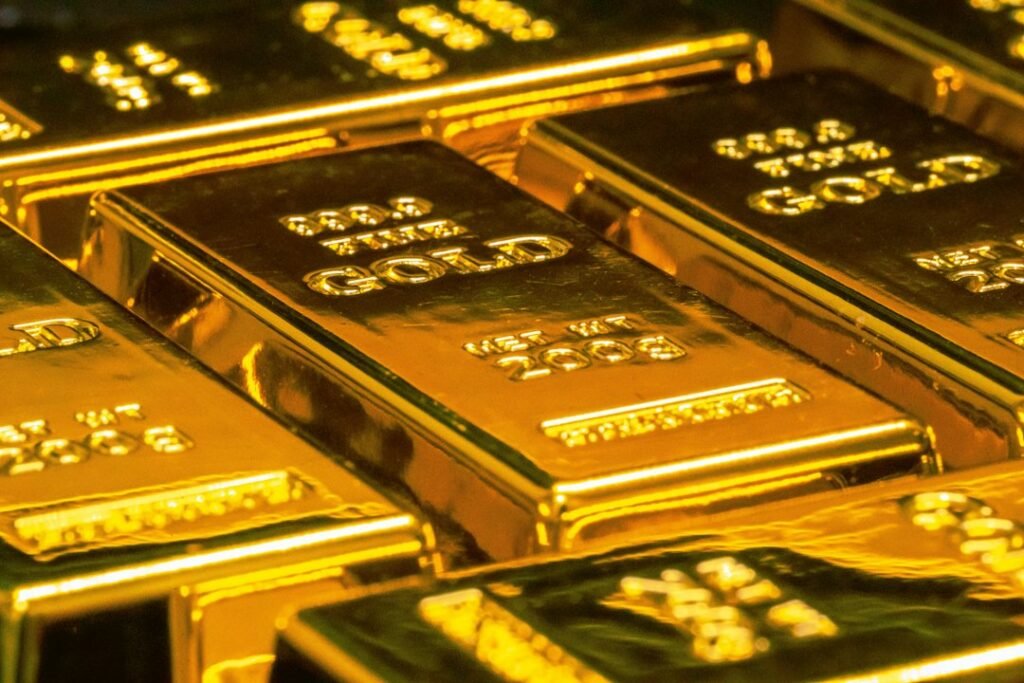
Every few years, a quiet shift in the world’s financial plumbing turns into a headline. Right now, that shift is gold. Central banks, the institutions that set interest rates and guard national reserves, have been buying the metal at a pace that would have seemed unusual a generation ago. If you hold a 401(k), a savings account or a mortgage, you might wonder why the buying habits of the Bank of Poland should matter to you. They do, and the reasons say a lot about how the global financial system is changing.
This guide explains what central banks are doing, why they are doing it, and what practical lessons US households can take from it, without the hype.
The big picture: official-sector gold buying stays historically strong
According to figures from the World Gold Council reported by Mining.com in March 2026, official-sector gold buying reached about 863 tonnes in 2025. That was slightly below the record levels of 2022 and 2023, but still strong by historical standards. The same report said the council expects central banks to buy roughly 850 tonnes in 2026, almost identical to last year.
Gold prices have reflected the appetite. The same article noted that gold surged to an all-time peak of nearly $5,600 an ounce earlier this year before coming under pressure in recent weeks. In other words, the story is not a smooth, one-way climb. It is a story of heavy demand paired with real volatility.
Who is buying?
Buying is not limited to one region. Per the same reporting:
- Poland was the top buyer in 2025, adding more than 80 tonnes.
- Kazakhstan and Brazil also posted significant increases.
- China and Turkey kept accumulating, though more slowly than in earlier years.
- Indonesia and Malaysia returned to the market in early 2026 after a long hiatus.
The World Gold Council’s Shaokai Fan said that new or long-inactive central banks are “entering the gold market,” adding that this “might be a trend that will continue into 2026.”
Why would a central bank want gold?
Central banks hold reserves to protect their currencies and to have something to rely on in a crisis. Most of those reserves sit in foreign government bonds and currencies, with the US dollar playing the leading role. Gold offers something different.
- No counterparty. A bar of gold is not someone else’s promise to pay. It cannot default and cannot be frozen by another government’s decision.
- Diversification. Gold does not move in lockstep with bonds or currencies, so it can cushion a reserve portfolio when other assets stumble.
- Confidence. Visible gold holdings can reassure markets and citizens about a country’s financial footing.
- Geopolitics. Commentators often link the buying to geopolitical risk and to the broader debate over reducing reliance on the dollar. It is a popular explanation, but motives are rarely announced, and analysts disagree about how much each factor matters.
Is this the end of the dollar? Probably not
Headlines sometimes treat gold buying as proof that the dollar is on its way out. That reads too much into the data. Gold is a reserve diversifier, not a replacement for the world’s most liquid markets. The US also remains the largest official gold holder, with more than 8,100 tonnes according to figures cited in the Mining.com article, which attributes them to BestBrokers and the World Gold Council. Germany holds about 3,350 tonnes, while Italy and France hold roughly 2,400 to 2,450 tonnes each.
A more accurate reading: countries are spreading their bets. They still use dollars for trade and borrowing, but they want a portion of reserves that no foreign government can touch. We have covered the wider currency debate in our piece on the de-dollarization question, and the gold story is one chapter in it.
A concrete scenario: what this looks like for a US household
Consider a hypothetical couple, Maria and David, in their early 40s. They hold a diversified mix of US stock index funds and bond funds in their retirement accounts. After reading about record gold prices, David wants to move a large slice of their savings into gold.
Maria asks three questions, and they are the right ones:
- What problem are we solving? If the goal is protection against a weaker dollar or market stress, a small allocation might help. If the goal is chasing a recent rally, that is a different and riskier plan.
- What is our time horizon? Gold pays no interest or dividends. Over long periods, its value depends entirely on price changes, and as the recent pullback shows, those can be sharp.
- What are the costs? Physical bullion involves storage and insurance. Funds carry expense ratios. Gains may be taxed differently from stock gains, so a tax professional should weigh in.
They land on a modest allocation held through a low-cost fund inside a diversified plan, and they leave the rest of the strategy untouched. The important point is not the exact percentage. It is that they decided the role gold would play before they bought it.
Ways households can get gold exposure, and the trade-offs
If, after thinking it through, a household decides some exposure makes sense, the main routes each carry different strengths and weaknesses. None is automatically best.
- Physical coins and bars. You hold the real thing, but you pay dealer markups, and you must store and insure it securely.
- Exchange-traded funds. Easy to buy and sell in a brokerage account, with an annual fee. You own shares, not metal in your hands.
- Mining company stocks. These are businesses, so results depend on costs, management and debt as well as the gold price. They can swing more sharply than the metal itself.
Whichever route you consider, compare total costs, understand how gains are taxed, and be wary of anyone using urgency or fear to sell you something. A sales pitch built on panic is a red flag.
Lessons from the central bank playbook
Individuals are not central banks, but a few ideas translate well.
- Diversify across risk types. Central banks hold different kinds of assets because each fails in different circumstances. Your portfolio can follow the same logic.
- Think in years, not weeks. Official buyers accumulate over long periods. They do not time monthly price swings.
- Know why you own it. Every asset should have a job: growth, income, stability or insurance.
- Respect volatility. A near-$5,600 peak followed by a pullback is a reminder that even a so-called safe haven can drop.
What to watch next
If you want to follow this story, keep an eye on a handful of indicators:
- The World Gold Council’s periodic reports on central bank demand, and whether actual purchases track its roughly 850-tonne forecast for 2026.
- Whether new buyers such as Indonesia and Malaysia continue accumulating, or whether the early-2026 return proves temporary.
- Any signs that certain countries are selling to raise foreign-exchange reserves. The council’s Fan said it was “too early to see” whether sales happened during the recent sell-off, so treat such claims cautiously.
- US interest-rate policy, since higher yields on bonds make a non-yielding asset like gold relatively less attractive to some investors.
Key takeaways
- Central banks bought about 863 tonnes of gold in 2025, and the World Gold Council expects roughly 850 tonnes in 2026.
- Buyers span many countries, led in 2025 by Poland, with Kazakhstan and Brazil also adding significantly.
- The motivation is diversification and security, not necessarily a rejection of the dollar.
- Gold hit a record near $5,600 an ounce this year, then pulled back, so volatility is real.
- For households, the useful lesson is to give every asset a clear purpose and keep any gold allocation modest and deliberate.
Frequently asked questions
Why are central banks buying so much gold?
Gold carries no counterparty risk and diversifies reserves that are mostly held in foreign currencies and bonds. Analysts often cite geopolitical uncertainty as a driver, though individual central banks rarely explain their decisions in detail.
Should I buy gold because central banks are?
Not automatically. Central banks have different goals, time horizons and tax situations than households. If you consider gold, decide what role it plays in your overall plan and size it accordingly.
Does this mean the US dollar is losing its status?
The evidence does not show that. Central banks are adding gold alongside their existing reserves, and the US itself is the largest official gold holder. The more accurate description is diversification rather than abandonment.
Sources: Mining.com, “Central banks’ gold buying momentum carries into 2026”
This article is for educational purposes only and is not investment, tax or legal advice. Consult a qualified professional before making financial decisions.