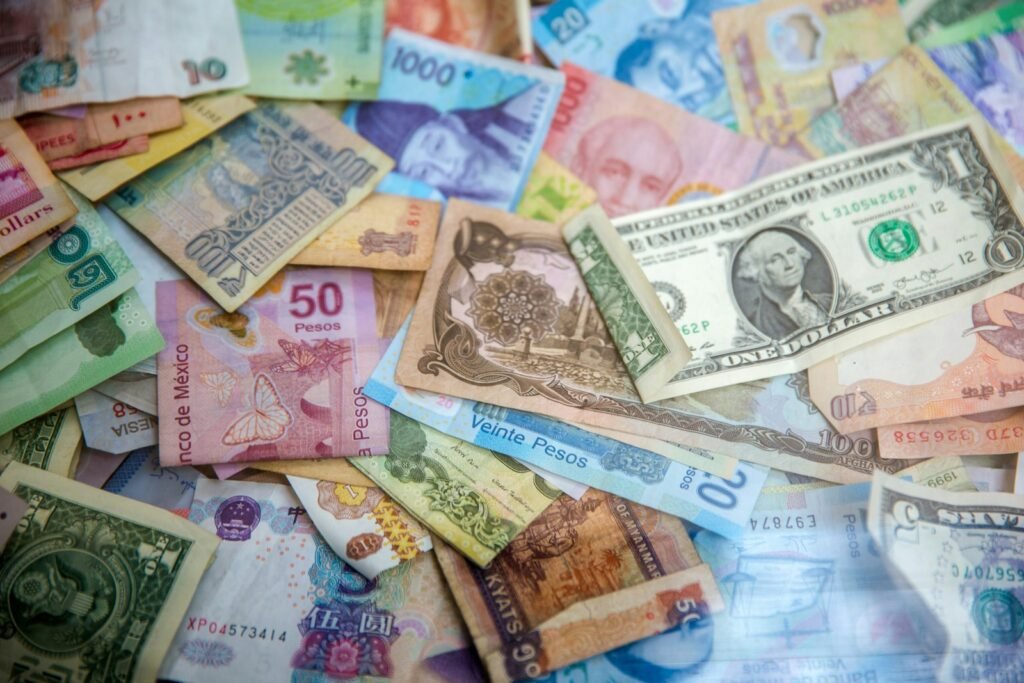
When an American investor buys a European stock or an emerging-market bond, two bets are placed at once. The first is on the asset itself. The second, often overlooked, is on the currency in which that asset is priced. Currency hedging is the set of tools used to separate those two decisions.
Why Currency Matters in Global Portfolios
Returns on foreign holdings are measured in the investor’s home currency. If a foreign stock rises in local terms but the local currency weakens against the dollar, part or all of the gain can disappear on conversion. The reverse can also happen: a flat local return can look attractive if the foreign currency strengthens.
For equities, currency moves are often a secondary driver compared with the shares’ own volatility. For bonds, the picture is different. Bond returns tend to be steadier, so currency swings can account for a much larger share of total risk.
How Hedging Works
The most common instrument is the forward contract. An investor agrees today to exchange a set amount of foreign currency for dollars at a fixed rate on a future date. If the foreign currency falls in the meantime, the gain on the forward offsets the loss on the underlying asset.
Funds usually roll these contracts forward every month or quarter, so a hedge is a continuing process rather than a one-time trade. Other tools include currency futures and options, though options carry an upfront premium and are less common in broad retail products.
The Cost of Hedging
Hedging is not free. The forward rate reflects the difference in short-term interest rates between the two currencies. In general, hedging into a lower-yielding currency costs the investor the rate difference, while hedging into a higher-yielding one can earn a small carry. Because interest-rate gaps change over time, the cost of a hedge can move from year to year.
There are also transaction costs and, for funds, management fees that may be higher for hedged share classes. These costs compound, which is one reason long-term investors weigh the decision carefully.
When Hedging Tends to Make Sense
There is no universal answer, but a few general principles are widely discussed among portfolio managers:
- Foreign bonds: Many investors hedge, because currency volatility can overwhelm the modest return from fixed income.
- Foreign equities: Many investors leave these unhedged or partly hedged, since currency exposure can act as a diversifier and the cost of hedging adds up.
- Short time horizons: Someone who will need the money soon has less time for currency moves to average out, which strengthens the case for hedging.
- Liabilities in foreign currency: If future spending will be in another currency, holding that currency may be the hedge.
Partial Hedging as a Middle Path
Hedging is not all-or-nothing. A half-hedged position reduces currency risk without eliminating it, and it avoids the regret of fully committing to either outcome. Some investors choose a fixed ratio and rebalance periodically, which keeps the decision rule-based rather than driven by currency forecasts.
Common Pitfalls
The first is treating a hedge as a way to profit from a currency view. A hedge removes exposure; it does not add return. The second is ignoring cash-flow needs. Forward contracts settle in cash, and a large currency move in the asset’s favor can mean margin or collateral requirements on the hedge, which requires liquidity.
The third is overlooking indirect exposure. A US-listed multinational earns revenue abroad, so a domestic stock can carry currency sensitivity without any explicit foreign holding. Likewise, a hedged fund only hedges its stated holdings; the companies inside may still have their own currency risks.
Reading the Fund Label
Many exchange-traded funds now offer both hedged and unhedged versions of the same index. Before choosing, check the fund’s stated hedging method, its roll frequency, and the expense ratio difference. Compare performance over full market cycles, not a single year, since hedged and unhedged versions can diverge widely depending on the dollar’s direction.
The Bottom Line
Currency hedging is a risk-management tool, not a return engine. The right approach depends on the asset class, the investment horizon, and where future spending will occur. Understanding what is being hedged, what it costs, and what remains exposed allows investors to make that choice deliberately rather than by default.
This article is for general educational purposes and is not investment advice.