Last updated: September 2026. Editorial Team — researched using data from Bloomberg, Morgan Stanley, FactSet, and Goldman Sachs, as reported by Yahoo Finance, Landmark Wealth Management, and Benzinga. See “Sources & Methodology” for our full source list.
Quick Answer
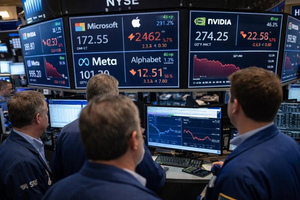
2026 has produced a genuinely unusual divergence for the Magnificent Seven: the group’s stock prices fell roughly 7% through February 2026 even as consensus earnings estimates for the group rose to 18% growth for the year, up from an earlier 14% estimate. That marks the first period since 2022 where the Mag 7 has lagged the broader S&P 500 in price performance, according to Landmark Wealth Management’s analysis, even as Morgan Stanley projects the group’s net income growing 25% in 2026 versus just 11% for the rest of the S&P 500 (the “S&P 493”). In plain terms: the market has been pricing in more caution about these stocks than the earnings numbers alone would suggest is warranted, at least so far this year.
The Stock-Price Story
Landmark Wealth Management’s analysis of FactSet, S&P, and J.P. Morgan Asset Management data puts the 2026 reversal in historical context that makes clear just how unusual it is. Since January 1, 2021, the Magnificent Seven had dramatically outperformed the broader index in every full calendar year: +40% in 2021 versus +27% for the S&P 500; a -40% decline in the 2022 bear market that still accounted for a disproportionate 56% share of the index’s overall losses due to the group’s heavy weighting; and a +76% surge in 2023 versus +24% for the S&P 500, contributing 63% of the market’s total gains that year. Through February 2026, that pattern flipped: the Mag 7 was down 7% while the S&P 500 sat flat at 0% and the S&P 493 (the index excluding the Mag 7) was actually up 4% — the first period since 2022 where the group has genuinely lagged the broader market, a shift Landmark Wealth Management describes as “highlighting increased dispersion within the ‘Magnificent 7’ cohort” itself, not just relative to the wider market.
Photo by ClickerHappy via Pexels
Meanwhile, the Earnings Story Is Getting Stronger
Yahoo Finance’s February 2026 reporting captures the earnings side of the divergence directly: consensus estimates now point to 18% earnings growth in 2026 for the Magnificent Seven, up from 14% following the tariff-related selloff in May — a genuine upward revision, not a downgrade, occurring at the same time stock prices were falling. Bloomberg data cited in that same reporting shows profit growth estimates climbing for the tech giants even as forecasts were being trimmed for the other 493 S&P 500 companies over the same stretch — a clear divergence between where the earnings momentum is concentrated and where the market’s price action has actually gone.
Morgan Stanley’s fresh analysis of S&P 500 earnings estimates, cited by Yahoo Finance’s April 2026 coverage, reinforces the scale of that earnings gap: Mag 7 net income is estimated to grow 25% in 2026, compared to just 11% for the S&P 493, with that relative outperformance expected to stretch into 2027 as well. Morgan Stanley’s analysis notes the rest of the index isn’t expected to close that earnings-growth gap until the fourth quarter of 2026, given how much tougher the year-over-year comparisons become for the tech giants specifically as 2025’s exceptional results become the new baseline.
Why the Disconnect? AI Anxiety, Not Weak Results
J.P. Morgan Asset Management’s analysis offers the most direct explanation for why stock prices and earnings estimates have moved in opposite directions: despite stellar earnings growth, “AI anxieties are punishing upside AI capex surprises more than upside revenue results are being rewarded.” That’s a genuinely important, specific distinction — investors haven’t been punishing the Magnificent Seven for weak results; they’ve been punishing them specifically for spending more on AI infrastructure than expected, even when that spending comes alongside strong reported revenue. J.P. Morgan’s analysis also notes a longer-run pattern worth flagging: in 2023, all seven Magnificent Seven stocks easily beat the S&P 500; in 2024, six did; by 2025, just two did, with the magnitude of outperformance shrinking considerably each year — a gradual, multi-year narrowing of the group’s collective dominance that predates 2026’s more dramatic price-earnings divergence.
Which Companies Actually Have the Best Earnings Track Records
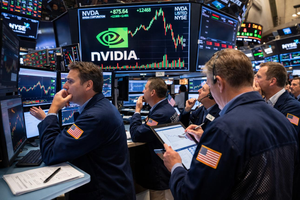
Quartz’s analysis of individual earnings-surprise histories within the group finds genuine differentiation worth noting for investors trying to distinguish among the seven rather than treating them as a single monolithic block. Microsoft has missed earnings estimates only once in the last five years (back in 2022), an exceptional beat rate, even as its shares struggled in 2026, down 11.6% year-to-date at one point — a valuation improvement that brought its forward P/E down from over 30x the prior year to just 24.7x, according to Quartz’s analysis. Apple similarly earned “earnings all-star” status in the same analysis. Nvidia, despite widespread expectations the broader AI investment cycle would slow, continued beating earnings estimates throughout the period examined.

Photo by Tara Winstead via Pexels
How Much of the S&P 500’s Growth Still Comes From These Seven Stocks
Even with the price-side reversal, the group’s earnings dominance within the broader index remains extraordinary in scale. Goldman Sachs’s forecast, cited by Benzinga, projects S&P 500 earnings per share of $305 in 2026, representing 12% year-over-year growth, followed by another 10% increase in 2027. Of that 12% 2026 growth figure, Goldman estimates the seven largest stocks will account for 46% of total S&P 500 earnings growth — meaning just 1% of index constituents, representing roughly 36% of total market capitalization, are expected to deliver nearly half of all earnings growth across the entire 500-company index. That figure does mark a modest decline from 2025, when the same group contributed roughly 50% of earnings growth, suggesting the market’s earnings base is gradually, if slowly, broadening beyond the Mag 7 even as their absolute earnings contribution remains dominant.
Frequently Asked Questions
Why did Magnificent Seven stocks fall in 2026 despite strong earnings?
According to J.P. Morgan Asset Management’s analysis, investors have been punishing upside surprises in AI capital expenditure more than they’ve been rewarding upside surprises in revenue, even as earnings estimates for the group rose to 18% growth for the year.
How much of S&P 500 earnings growth comes from the Magnificent Seven?
Goldman Sachs estimates the seven largest stocks will account for 46% of total S&P 500 earnings growth in 2026, down modestly from roughly 50% in 2025.
Which Magnificent Seven stocks have the best earnings track records?
Microsoft has missed earnings estimates only once in the last five years, Apple has a similarly strong beat rate, and Nvidia has continued beating estimates despite widespread expectations the AI investment cycle would slow.
Is this the first time the Magnificent Seven has underperformed the market?
Through February 2026, the group’s 7% decline versus a flat S&P 500 marked the first period since the 2022 bear market where the Magnificent Seven has lagged the broader index.
Sources & Methodology
This article draws on data and analysis from: Yahoo Finance’s February 18, 2026 and April 20, 2026 coverage of Magnificent Seven earnings estimates, including Bloomberg and Morgan Stanley data; Landmark Wealth Management’s March 2026 analysis of Mag 7 performance using FactSet, S&P, and J.P. Morgan Asset Management data; J.P. Morgan Asset Management’s analysis of AI capex anxiety and equity concentration; Quartz’s April 2026 review of individual Mag 7 earnings-surprise track records; and Benzinga’s December 2025 coverage of Goldman Sachs’s 2026 S&P 500 earnings forecast. Figures reflect the most recently published data as of this article’s last-updated date and are subject to revision as the year progresses.
This article is for informational purposes and does not constitute investment advice. It is not a recommendation to buy or sell any security mentioned.