For years, the ascent of ESG—the integration of Environmental, Social, and Governance factors into investment decisions—seemed unstoppable. What began as a niche strategy for ethically-minded investors evolved into a mainstream financial movement, commanding trillions of dollars in global assets. Major asset managers like BlackRock and State Street embraced it, corporate boards established sustainability committees, and a whole industry of ESG ratings and reporting sprang up. It was framed as a win-win: a way to manage long-term risk, capitalize on the transition to a greener economy, and build a more equitable society, all while delivering competitive returns.
Then, the backlash began.
Suddenly, the acronym that stood for a seemingly uncontroversial set of risk-management principles found itself at the center of a raging political firestorm in the United States. What was once a boardroom topic is now a fixture on the campaign trail, in state legislatures, and on cable news. Politicians decry it as “woke capitalism,” alleging a covert ideological agenda that threatens American freedom and economic prosperity. States are passing laws to ban their pension funds from doing business with financial firms perceived as “boycotting” fossil fuel or firearm industries. Meanwhile, the financial industry is caught in the middle, facing pressure from both sides: from progressives demanding more robust climate action and from conservatives accusing them of ideological overreach.
This article will delve deep into the ESG backlash, tracing its origins, unpacking the arguments from all sides, and analyzing its profound impact on the financial markets, corporate strategy, and the very fabric of American political discourse. This is not just a story about investing; it is a story about how core American values—freedom, capitalism, responsibility, and prosperity—are being defined, contested, and redefined in the 21st century.
Part 1: Understanding the ESG Ecosystem
To comprehend the backlash, one must first understand what ESG is and, just as importantly, what it is not.
What is ESG? The Core Components
ESG is a framework for evaluating a company’s operational and strategic resilience based on non-financial factors that can materially impact its performance.
- Environmental (E): This criteria assesses a company’s impact on the natural world. Key factors include:
- Climate change and carbon emissions
- Air and water pollution
- Biodiversity and land use
- Waste management and circular economy
- Water scarcity
- Social (S): This criteria examines how a company manages relationships with its stakeholders. Key factors include:
- Employee relations, diversity, and working conditions
- Data privacy and security
- Customer satisfaction and product safety
- Human rights and supply chain labor standards
- Community relations
- Governance (G): This criteria focuses on a company’s internal system of practices, controls, and procedures. Key factors include:
- Board composition and diversity
- Executive compensation
- Shareholder rights
- Anti-corruption and ethical business practices
- Transparency and disclosure
Crucially, from a financial perspective, ESG is not primarily about values; it is about value. Proponents argue that a company with poor environmental practices faces regulatory and reputational risks. A company with weak governance is more prone to scandal. A company that mistreats its employees may suffer from low productivity and high turnover. Therefore, integrating ESG factors is a form of sophisticated, long-term risk management.
The Global Rise of ESG
The momentum behind ESG has been building for decades, driven by several key forces:
- Investor Demand: A generational transfer of wealth to Millennials and Gen Z, who often express a desire to align their investments with their values, has created massive market demand for ESG products.
- Risk Management: The 2008 financial crisis exposed profound governance failures. High-profile corporate scandals (e.g., Volkswagen’s “Dieselgate,” BP’s Deepwater Horizon) highlighted the immense financial costs of environmental and social missteps.
- Regulatory Push: In Europe, regulations like the EU’s Sustainable Finance Disclosure Regulation (SFDR) have made ESG disclosure mandatory for large companies. This created a ripple effect globally.
- Corporate Recognition: Many business leaders have come to see sustainability and strong stakeholder relationships as essential for long-term strategy, talent attraction, and brand reputation.
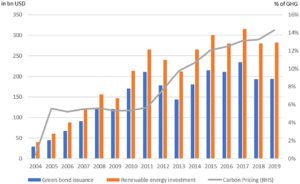
By 2022, global sustainable investment assets reached $30.3 trillion, demonstrating its entrenched position in the global financial system. However, this very success made it a larger and more attractive target for critics.
Part 2: The Gathering Storm – The Roots of the Backlash
The backlash did not emerge from a vacuum. It is the product of a confluence of cultural, political, and economic forces that have been simmering for years.
From “SRI” to “ESG”: A Shift in Framing
The predecessor to ESG was often called Socially Responsible Investing (SRI), which typically used negative screens to exclude “sin stocks” like tobacco, firearms, or gambling. SRI was explicitly values-based and often accepted lower returns as a cost of aligning with one’s ethics.
ESG, by contrast, was marketed as a financially material and risk-based approach. This shift was strategic; it aimed to appeal to the fiduciary-duty-focused mainstream financial world. However, this very framing created a vulnerability. Critics began to argue that the “E” and “S” were simply a Trojan horse for the same progressive values that underpinned SRI, disguised in the technical, unassailable language of finance. They claimed that asset managers were using other people’s money (e.g., pension funds) to advance a political agenda without explicit consent.
The Politicization of Corporate America
The backlash accelerated amid a broader cultural shift where corporations were increasingly expected to take public stances on social and political issues. From LGBTQ+ rights and racial justice to voting laws and abortion access, companies found themselves under pressure from employees, customers, and investors to speak out.
This “politicization of everything” created a fertile ground for a counter-movement. Conservatives, who had long argued that a corporation’s sole responsibility was to maximize shareholder value, viewed this trend with deep suspicion. They saw it as an end-run around the democratic process, where unelected corporate elites were imposing a liberal orthodoxy on the nation.
The Role of Key Political Actors and Think Tanks
A network of conservative think tanks, political figures, and media outlets began to systematically target ESG.
- Politicians: Figures like Florida Governor Ron DeSantis and Texas Governor Greg Abbott became vocal critics. DeSantis famously derided ESG as a “woke ideological power grab.” Former Vice President Mike Pence and numerous other Republican leaders have echoed these sentiments, framing it as an attack on American energy independence and economic freedom.
- Think Tanks: Organizations like The Heritage Foundation, The American Legislative Exchange Council (ALEC), and The Heartland Institute have produced reports, drafted model legislation, and provided the intellectual ammunition for the anti-ESG movement. They argue that ESG undermines fiduciary duty, harms retirees by limiting investment options, and empowers a “woke” financial elite.
- Media: Conservative media outlets have relentlessly covered the ESG debate, often using terms like “woke capitalism,” “ESG scam,” and “climate lockdowns” to galvanize their audience.
The core grievance crystallized around the concept of “boycotts.” Critics alleged that financial institutions were collectively boycotting entire industries—specifically, fossil fuels and firearms—thereby depriving them of capital and driving up costs for consumers.
Part 3: The Battlefronts – How the Backlash is Playing Out
The anti-ESG movement has moved from rhetoric to concrete action, primarily through state-level legislation and legal challenges.
The Anti-Boycott Laws: A State-by-State Assault
The most significant manifestation of the backlash has been the proliferation of state-level laws aimed at penalizing financial companies that are perceived to be “boycotting” certain industries.
- The Texas Model: In 2021, Texas passed Senate Bill 13, which created a list of financial companies that “boycott” energy companies. The state was then mandated to divest from these firms, including giants like BlackRock, JPMorgan, and UBS. The law also prohibits state entities, such as pension funds and municipalities, from contracting with these listed companies for banking services.
- The Florida Stance: Under Governor DeSantis, Florida passed a resolution prohibiting its state pension fund managers from considering ESG factors in their investment decisions, stating that investments must only be based on pecuniary factors (those that have an expected material effect on risk and return).
- Widespread Adoption: As of late 2023, over a dozen states have passed similar anti-ESG laws, and many more have legislation pending. ALEC has provided model legislation, such as the “Energy Discrimination Elimination Act,” to help states craft these laws efficiently.
The Impact: These laws have created a complex and fragmented regulatory landscape for national financial firms. They have also sparked concerns about unintended consequences. For example, municipalities in Texas found that banning certain banks led to higher borrowing costs because it reduced competition for underwriting municipal bonds.
The Fiduciary Duty Debate
At the heart of the legal and philosophical conflict is the concept of fiduciary duty—the legal obligation to act in the best financial interest of another party.
- The Pro-ESG View: Proponents argue that considering ESG factors is part of fiduciary duty. Ignoring climate risk, supply chain disruptions, or poor corporate governance is a failure to prudently manage long-term risk. The Biden Administration reinforced this view with a 2022 Department of Labor rule allowing retirement plan managers to consider ESG factors, reversing a Trump-era prohibition.
- The Anti-ESG View: Critics contend that using ESG criteria violates fiduciary duty by introducing non-pecuniary, ideological objectives that can sacrifice financial returns. They argue that if an oil company is profitable, a fiduciary is obligated to invest in it, regardless of its environmental impact.
This debate is being fought in courtrooms, statehouses, and boardrooms across the country.
The “Woke Capitalism” Narrative and its Power
The term “woke capitalism” has become a powerful political rallying cry. It effectively frames ESG not as a risk-management tool, but as a form of cultural imperialism imposed by coastal elites on Middle America. This narrative resonates with voters who feel that traditional American values and industries are under attack. By linking ESG to broader culture war issues, critics have successfully mobilized political opposition that goes far beyond the technical details of investment analysis.
Part 4: The Countervailing Forces – Why ESG Isn’t Disappearing
Despite the intense political heat, the forces driving ESG have not vanished. The backlash exists alongside powerful, entrenched countervailing pressures.
The Global and Market Reality
The United States does not operate in a vacuum. The global push for sustainability and standardized ESG disclosure continues unabated.
- International Standards: The International Sustainability Standards Board (ISSB) is developing a global baseline of sustainability disclosures, which major U.S. companies operating internationally will likely have to adhere to.
- EU Regulations: The EU’s Corporate Sustainability Reporting Directive (CSRD) is far more stringent than anything in the U.S., and it applies to many large U.S. companies with significant operations in Europe.
- Market Demand: Trillions of dollars in assets are still allocated to ESG strategies. While the political backlash may cause some rebranding (e.g., using terms like “sustainable investing” or “responsible investing”), the underlying demand from a significant portion of the investor base remains.
The Physical and Transition Risks of Climate Change
The core “E” in ESG is underpinned by a physical reality that politics cannot easily wish away.
- Physical Risks: Companies face increasing costs from climate-related disasters—floods, wildfires, hurricanes—that disrupt supply chains, damage property, and impact operations. Insurers are already pulling out of high-risk areas.
- Transition Risks: As the world moves toward a lower-carbon economy, companies heavily invested in fossil fuels face the risk of stranded assets (e.g., oil reserves that become uneconomical to extract) and losing market share to cleaner technologies.
Ignoring these risks is, from a business perspective, increasingly untenable. This is why even in anti-ESG states, utility companies are still investing in renewables because it makes economic sense.
Read more: The Cashless Continent? Why the US Lags in Digital Payments and What’s Changing
The Corporate and Institutional Balancing Act
Major corporations and financial institutions are walking a tightrope. They are facing:
- Pressure from the Left: Shareholder resolutions on climate and social issues continue to receive significant support. Activists and institutional investors are pushing for more ambitious targets and transparent reporting.
- Pressure from the Right: The threat of being blacklisted by states or accused of “wokeism” is a real business risk.
In response, many companies are becoming more cautious in their public communications. They may be scaling back the use of the term “ESG” while continuing the underlying practices of climate risk assessment, diversity reporting, and governance reviews. The focus is shifting from public virtue-signaling to the integration of these factors into core business strategy and risk management—a quieter, but potentially more durable, approach.
Part 5: The Road Ahead – Navigating a Fractured Landscape
The ESG debate is unlikely to be resolved anytime soon. It has become a proxy for a deeper ideological conflict in American society. So, what does the future hold?
A “Two-America” Approach to Investing?
The most likely outcome in the near term is a deepening divergence between “blue” and “red” states.
- Blue States (e.g., California, New York, Massachusetts) will likely continue to mandate climate risk disclosure, push for fossil fuel divestment in public pensions, and encourage ESG integration.
- Red States will continue to pass laws prohibiting the consideration of “non-pecuniary” factors and restrict business with banks they deem hostile to their key industries.
This creates a nightmare of compliance for national companies and financial institutions, which may be forced to create separate strategies and products for different jurisdictions.
The Search for Common Ground and Clearer Standards
Amid the noise, there are efforts to depoliticize the conversation by focusing on areas of potential agreement.
- Emphasizing Governance: The “G” in ESG is the least controversial. Strong, transparent, and accountable governance is universally seen as a good thing. Focusing on anti-corruption, board independence, and shareholder rights could be a less divisive path forward.
- Materiality is Key: There is a growing push to sharpen the definition of ESG to focus only on factors that are financially material to a specific company in a specific industry. The materiality of climate risk for a coastal real estate company is different from that for a software company. This precision can help separate legitimate risk management from ideological preferences.
- Standardizing Disclosure: The chaos of inconsistent ESG ratings (where a company can get a high score from one provider and a low score from another) has fueled skepticism. The development of more consistent, mandatory, and auditable disclosure standards, perhaps through the SEC’s climate disclosure rule or the ISSB, could reduce “greenwashing” and build trust.
Conclusion: More Than an Acronym
The ESG backlash is a profound moment in American economic and political history. It demonstrates that how we invest our capital is never a purely technical decision; it is imbued with values, worldviews, and visions for the future.
The term “ESG” itself may fade, rebranded or broken apart under political pressure. But the fundamental forces that gave rise to it—the existential threat of climate change, the demand for corporate accountability, the recognition of systemic risk, and the desire for investments to reflect a broader set of human concerns—are not going away.
The ultimate resolution will not be a decisive victory for one side or the other. It will be a messy, ongoing negotiation. It will involve finding a balance between legitimate ideological differences about the role of corporations in society and the undeniable financial realities of a changing world. The journey of ESG is a mirror of America itself: divided, complex, and struggling to define its future in an era of unprecedented challenge and change.
Read more: The Great Commercial Real Estate Reckoning: Assessing the Risks to US Regional Banks
Frequently Asked Questions (FAQ)
Q1: Is ESG just about climate change?
No, that is a common misconception. While the “E” (Environmental) component, which includes climate change, has received the most attention and is a major driver of the political backlash, ESG is a much broader framework. The “S” (Social) covers issues like employee treatment, data privacy, and human rights, while the “G” (Governance) focuses on board structure, executive pay, and shareholder rights. A narrow focus on climate misses the full scope of what ESG aims to assess.
Q2: Does investing in ESG funds mean sacrificing returns?
This is a hotly debated question with evidence on both sides. The core argument from ESG proponents is that by managing long-term risks (e.g., avoiding companies prone to environmental fines or labor disputes), ESG strategies can lead to more resilient and potentially superior long-term performance. Many studies have shown that ESG funds can perform on par with, or even outperform, conventional funds. However, performance can vary widely depending on the specific strategy, the fund manager, and market conditions. Like any investment, there are no guarantees, and past performance is not indicative of future results.
Q3: What is “greenwashing” and how is it related to ESG?
Greenwashing is the practice of making misleading or unsubstantiated claims about the environmental benefits of a product, service, or, in this case, an investment fund. It is a significant problem in the ESG space. A company might heavily promote a small sustainability initiative while its core business remains highly polluting, or a fund might label itself “ESG” based on weak criteria. The lack of standardized definitions and regulations has historically made greenwashing easier. The current push for stricter disclosure rules and auditing is largely aimed at combating this issue.
Q4: How are companies responding to the anti-ESG pressure?
Companies are adopting various strategies to navigate the polarized landscape:
- Rebranding: Some are quietly dropping the term “ESG” while continuing their sustainability and risk management work, using terms like “long-term value creation” or “responsible business.”
- Focusing on Governance: Many are emphasizing the less-controversial “G” and framing their actions in terms of fiduciary duty and prudent risk management.
- Regional Tailoring: Large national companies are carefully calibrating their messaging and actions depending on the political environment of the state they are operating in.
- Sticking to Core Strategy: Most are trying to stay focused on integrating these factors into their core business operations rather than making them a subject of public political statements.
Q5: What is the current status of the SEC’s climate disclosure rule?
The U.S. Securities and Exchange Commission (SEC) passed a rule in March 2024 mandating that public companies disclose certain climate-related risks. However, the rule was significantly scaled back from its original proposal. It no longer requires the disclosure of “Scope 3” emissions (indirect emissions from a company’s value chain) and has less stringent requirements for “Scope 1” and “Scope 2” (direct and indirect from energy) emissions. The rule is immediately facing a barrage of legal challenges, putting its future implementation in doubt. This legal battle exemplifies the deep political and legal divisions over ESG in the U.S.
Q6: As an individual investor, how can I navigate this confusing landscape?
- Look Beyond the Label: Don’t just invest in a fund because it has “ESG” or “Sustainable” in its name. Dig into its prospectus and holdings to understand its specific strategy. What criteria does it use? What companies does it actually hold?
- Define Your Own Goals: Are you primarily motivated by values, risk management, or a combination of both? Knowing your own priorities will help you filter the noise.
- Be Aware of Biases: Understand that all information about ESG now comes with a political slant. Seek out balanced, financial-based reporting from credible sources.
- Consider a Professional: Given the complexity, consulting with a financial advisor who understands your goals and the intricacies of sustainable investing can be a wise step.