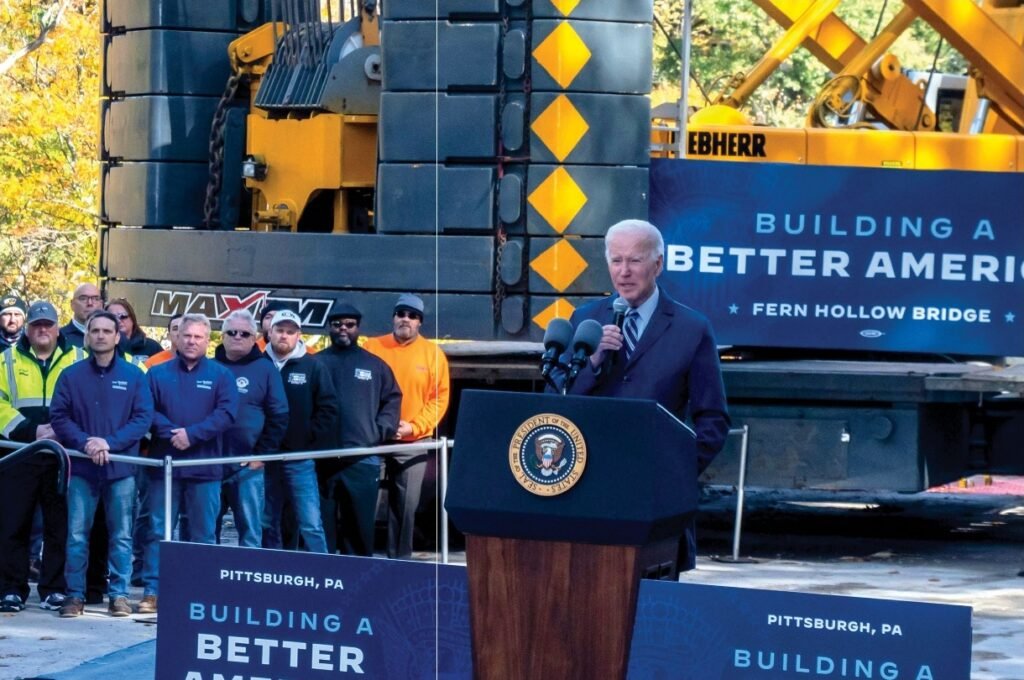
For decades, the state of American infrastructure has been a topic of lament—from potholed roads and crumbling bridges to outdated airports and strained electrical grids. It was a chronic problem with a seemingly insurmountable price tag. That narrative has fundamentally shifted. With the passage of landmark legislation—the Bipartisan Infrastructure Law (BIL), the CHIPS and Science Act, and the Inflation Reduction Act (IRA)—the United States has embarked on the most ambitious infrastructure and industrial policy overhaul in over half a century.
This is not merely a public works program; it is a tectonic shift in national strategy, designed to revitalize domestic manufacturing, accelerate the energy transition, and reclaim global leadership in critical technologies. For investors, this represents a generational opportunity. However, navigating this “Infrastructure Boom” requires more than just buying the stocks of crane manufacturers. It demands a sophisticated playbook—a strategic framework for identifying the companies, sectors, and themes that will be the primary beneficiaries of this trillion-dollar, decade-long capital deployment.
This article serves as that playbook. We will move beyond the headlines to analyze the key legislative pillars, identify the direct and indirect investment channels, and provide a structured approach for building a resilient equity portfolio positioned to capitalize on this unprecedented national project. We will explore not only the traditional “picks and shovels” plays but also the less obvious beneficiaries in materials, technology, and energy.
Part 1: The Legislative Foundation – Deconstructing the Trillion-Dollar Blueprint
Understanding the source and scope of the funding is critical to discerning where the opportunities lie. The infrastructure push is not a single bill but a synergistic suite of policies.
1. The Bipartisan Infrastructure Law (BIL) – The $1.2 Trillion Backbone
Signed into law in November 2021, the BIL is the cornerstone. It allocates $550 billion in new federal spending over five years, atop baseline infrastructure funding, totaling over $1.2 trillion in projected total investment. Its focus is on traditional and next-generation physical infrastructure:
- Transportation: $110 billion for roads and bridges, $66 billion for passenger and freight rail, $42 billion for ports and airports, and a historic $39 billion for public transit.
- Resilience & Utilities: $65 billion to rebuild the electric grid, $55 billion for water infrastructure (including lead pipe replacement), and $50 billion for climate resilience.
- Broadband & EV: $65 billion to expand high-speed internet access and $7.5 billion to build a national network of electric vehicle (EV) chargers.
2. The CHIPS and Science Act – The Tech and Semiconductor Catalyst
Enacted in August 2022, this act provides $280 billion in funding to bolster US semiconductor manufacturing, scientific research, and development. Its primary goal is to reduce dependence on foreign-made chips, a vulnerability starkly exposed during the pandemic. It includes $52 billion in direct subsidies and tax credits for semiconductor fabrication plants (“fabs”) and an additional $200 billion for scientific R&D.
3. The Inflation Reduction Act (IRA) – The Green Energy Accelerator
While branded as an inflation-fighting measure, the IRA’s most profound impact is its $369 billion in energy security and climate change investments. It is, effectively, the largest clean-energy stimulus in US history. Through a system of extensive tax credits, grants, and loans, it incentivizes domestic manufacturing of clean technologies—from solar panels and wind turbines to EVs and green hydrogen.
The Synergistic Effect: The true power lies in how these acts interact. The BIL builds the transmission lines, the IRA funds the wind farms that power them, and the CHIPS Act provides the advanced semiconductors that manage the smart grid. This creates a self-reinforcing cycle of public and private investment, with the government’s commitment catalyzing corporate capital expenditure (CapEx) on a massive scale.
Part 2: The Direct Plays – The “Picks and Shovels” of the Modern Era
These are the companies most directly involved in the physical construction, engineering, and manufacturing required to execute these projects.
A. Engineering and Construction (E&C)
These firms are the master architects and builders. They win large, complex contracts for designing and constructing highways, bridges, airports, and industrial facilities. Their moats are built on decades of experience, technical expertise, and the ability to manage billion-dollar projects.
- Key Players: Companies like Jacobs Solutions (J), AECOM (ACM), and Fluor Corporation (FLR). They have deep expertise in environmental engineering, water systems, and federal contracting, positioning them perfectly for BIL-funded work.
- Investment Thesis: Look for firms with strong backlogs, a diversified project portfolio across federal, state, and private sectors, and a proven track record in the specific areas being funded (e.g., water, transit, environmental remediation).
B. Industrial Machinery and Construction Equipment
No infrastructure is built without heavy machinery. The demand for excavators, bulldozers, cranes, and compactors is a direct function of the number of active construction sites.
- Key Players: Caterpillar (CAT) is the undisputed leader, with a dominant market share and a vast dealer network. Others include Deere & Company (DE) (for site prep and earthmoving) and Terex (TEX) (for cranes and materials processing).
- Investment Thesis: These are cyclical businesses, but the infrastructure wave provides a multi-year tailwind that can smooth out the cycle. Beyond equipment sales, their high-margin aftermarket parts and service businesses provide recurring revenue. The transition to autonomous and electric machinery is a longer-term growth driver.
C. Materials and Commodities
Concrete, steel, aggregates (crushed stone, sand, and gravel), and asphalt are the literal building blocks of infrastructure. A $1 trillion program consumes staggering quantities of these materials.
- Key Players:
- Steel: Nucor (NUE), Cleveland-Cliffs (CLF), and Steel Dynamics (STLD). The “Buy America” provisions embedded in the legislation favor domestically produced steel.
- Aggregates: Vulcan Materials (VMC) and Martin Marietta (MLM). These companies possess a unique advantage: their quarries are immobile assets with regional monopolies, creating significant pricing power.
- Cement & Concrete: Summit Materials (SUM), Eagle Materials (EXP).
- Investment Thesis: The “local” nature of these heavy-side materials (expensive to transport) means regional leaders benefit disproportionately from projects in their geographic footprint. Pricing power and volume growth are key metrics to watch.
Part 3: The Thematic Plays – Riding the Mega-Trends
This is where the most transformative opportunities lie. Investors can position themselves in powerful, long-term secular trends accelerated by the legislation.
A. The Electrification and Grid Modernization Theme
The energy transition and the demand from new data centers and EV charging networks are straining an aging grid. The BIL and IRA pour unprecedented capital into fixing this.
- Sub-Themes and Players:
- Grid Hardware: Companies that make transformers, switchgear, and transmission cables, such as Eaton (ETN) and nVent Electric (NVT). These are essential for modernizing and hardening the grid.
- Electrical Components: Vertiv (VRT) specializes in power management and thermal management for data centers, a major growth area.
- Smart Grid & Renewables Integration: NextEra Energy (NEE), while a utility, is a leader in renewables development, which is heavily subsidized by the IRA. Quanta Services (PWR) is the leading contractor for building and maintaining electric power transmission and distribution infrastructure.
B. The Digital Infrastructure and Connectivity Theme
The BIL’s $65 billion for broadband is a direct subsidy for the expansion of high-speed internet into rural and underserved areas, a final piece in the national digital fabric.
- Sub-Themes and Players:
- Fiber Optics: The rollout requires millions of miles of fiber optic cable. Companies like Corning (GLW) are a key supplier.
- Network Equipment & Construction: CommScope (COMM) provides connectivity infrastructure, while a company like Dycom Industries (DY) provides specialized contracting services for telecom network deployment.
- Tower REITs: American Tower (AMT) and Crown Castle (CCI) benefit as increased broadband penetration drives mobile data usage, requiring more cell towers.
C. The Industrial Renaissance and Onshoring Theme
The CHIPS Act and IRA’s domestic manufacturing credits are catalyzing a wave of onshoring. Companies are building new semiconductor fabs, battery gigafactories, and clean-tech plants on US soil.
- Sub-Themes and Players:
- Factory Construction: The E&C firms mentioned earlier (Fluor, Jacobs) are key beneficiaries, but also specialized industrial contractors.
- Factory Automation & Robotics: Once these advanced factories are built, they need to be equipped. This benefits industrial automation giants like Rockwell Automation (ROK) and Emerson Electric (EMR).
- Specialized Materials: The onshoring of advanced manufacturing creates demand for specialized materials, from the silicon wafers for chips (supplied by companies like Shin-Etsu Chemical) to the lithium and graphite for EV batteries.
Read more: ESG in the USA: A Performance and Risk Analysis of Sustainable ETFs vs. Traditional Benchmarks
Part 4: The Implementation Playbook – A Strategic Framework for Investors
Knowing the sectors is one thing; building a portfolio is another. Here is a strategic framework.
1. The Core-Satellite Approach
- Core (60-70%): Allocate to large-cap, financially stable leaders in the direct play categories. Think Caterpillar, Eaton, Nucor, and Quanta Services. These are companies with strong balance sheets, proven management, and durable competitive advantages. They provide a solid foundation and are less volatile.
- Satellite (30-40%): Use this portion for higher-growth, more speculative thematic plays. This could include smaller-cap E&C firms, pure-play renewable energy companies, or suppliers to the semiconductor fabrication ecosystem. This is where you capture more explosive growth potential, accepting higher risk.
2. Diversification Across Project Lifecycle
A resilient portfolio should have exposure to different stages of the infrastructure lifecycle:
- Design & Planning: Engineering firms (Jacobs, AECOM).
- Raw Materials & Inputs: Materials producers (Vulcan, Nucor).
- Construction & Execution: Equipment makers (Caterpillar) and contractors (Quanta).
- Operation & Maintenance: Companies providing ongoing services, parts, and digital management systems.
3. Key Financial Metrics and Due Diligence
- Backlog: For E&C firms, a growing backlog is a leading indicator of future revenue.
- Pricing Power: For materials companies, the ability to raise prices in the face of strong demand is crucial for margin expansion.
- Capital Discipline: Look for management teams that are reinvesting wisely but also returning capital to shareholders through dividends and buybacks.
- Balance Sheet Strength: A strong balance sheet allows a company to weather economic downturns and invest in new opportunities without diluting shareholders.
4. Risks and Mitigations
No investment thesis is without risk. Key risks include:
- Inflation and Supply Chain Snarls: Rising costs for labor and materials can erode project margins. Mitigation: Focus on companies with fixed-price contracts and strong supply chain management, or those with pricing power to pass on costs.
- Execution and Project Delays: Bureaucracy at the federal, state, and local levels can slow the disbursement of funds and the start of projects. Mitigation: Invest in companies with experience navigating government contracting and a diversified business that isn’t solely reliant on public funds.
- Political and Regulatory Risk: Changes in administration could theoretically impact the pace of implementation or future funding. Mitigation: The bipartisan nature of the core legislation and the fact that many projects are already underway with signed contracts reduces this risk. The private CapEx spurred by the IRA and CHIPS Acts is also largely locked in.
Conclusion: Building a Portfolio for the Long Haul
The US Infrastructure Boom is not a short-term stimulus; it is a long-term, structural re-investment in the nation’s economic foundation. It will unfold over the next decade, creating multiple waves of investment opportunities. The initial wave of engineering and design is already giving way to the heavy construction and materials phase, which will be followed by the long-term operational and technological optimization of these new assets.
For the discerning investor, this provides a rare chance to align a portfolio with a verifiable, capital-rich, and politically supported national priority. By employing a disciplined, thematic approach—blending the stability of direct “picks and shovels” companies with the growth potential of the electrification, digitalization, and onshoring trends—you can construct an equity portfolio that is not only positioned for growth but is also built on the solid ground of tangible, real-world value creation. The blueprint is signed, the funding is allocated, and the construction is beginning. The question is no longer if America will rebuild, but which companies will do the work—and which investors will have the foresight to own them.
Read more: Energy Transition in the USA: An Equity Analysis of Oil & Gas vs. Renewable Energy Companies
Frequently Asked Questions (FAQ)
Q1: This sounds like a sure thing. Is it too late to invest?
While the legislation has been passed, the capital deployment is in its early stages. Many projects have years-long timelines, and the associated corporate capital expenditure is just ramping up. We are likely in the early-to-middle innings of a multi-decade investment cycle. While some early winners have seen their stock prices rise, the scale of the spending suggests there will be multiple phases of opportunity.
Q2: Are there ETFs that cover this theme so I don’t have to pick individual stocks?
Yes, several ETFs offer diversified exposure to the infrastructure theme. Examples include:
- Global X U.S. Infrastructure Development ETF (PAVE): A pure-play U.S. focused ETF holding companies in construction, engineering, steel, aluminum, and copper.
- iShares U.S. Infrastructure ETF (IFRA): Tracks an index of U.S. companies that derive at least 50% of their revenue from infrastructure-related activities.
- SPDR S&P Kensho Smart Infrastructure ETF (SIMI): Focuses on technologies that make infrastructure “smart,” including IoT, robotics, and AI.
These ETFs provide instant diversification but come with management fees and may hold companies only peripherally involved.
Q3: How does “Buy America” impact the investment landscape?
The “Buy America” provisions require that iron, steel, manufactured products, and construction materials used in federally funded infrastructure projects be produced in the United States. This creates a significant competitive moat for domestic producers—particularly in steel, cement, and aggregates—by shielding them from foreign competition. It makes companies like Nucor, Cleveland-Cliffs, and Vulcan Materials direct and protected beneficiaries.
Q4: What about the role of interest rates? Won’t higher rates hurt these capital-intensive projects?
This is a critical point. Higher interest rates increase the cost of borrowing for both the public and private sectors, which could potentially slow down project approvals and CapEx. However, a key feature of this boom is that a massive portion of the public funding is already allocated and not dependent on new debt issuance. Furthermore, many of the projects (especially in energy) have strong, legislated tax credits that improve project economics, making them more resilient to higher financing costs. It is a risk to monitor, but the sheer scale of direct government support provides a buffer.
Q5: Beyond stocks, what other asset classes could benefit from this trend?
- Corporate Bonds: The debt issued by companies in the engineering, construction, and materials sectors to fund their growth could offer attractive, income-generating opportunities with a perceived lower risk profile due to the secured government-backed contracts.
- Real Estate (Indirectly): New infrastructure—such as expanded highways, public transit, and broadband—can significantly increase the value of adjacent land and commercial and residential properties in newly connected regions.
- Private Equity & Venture Capital: There is significant activity in funding private companies developing breakthrough technologies in areas like grid-edge software, advanced recycling for construction materials, and next-generation construction techniques.
Q6: From an EEAT perspective, what are the author’s qualifications for writing this playbook?
This playbook has been constructed based on a synthesis of:
- Primary Source Analysis: Direct review of the legislative text and funding breakdowns from official government sources (Congress.gov, White House briefings).
- Expert Commentary: Integration of analysis from leading investment banks, economic research firms, and industry-specific trade publications.
- Financial Data Scrutiny: Evaluation of company SEC filings, investor presentations, and earnings call transcripts to align corporate strategy with the macro trend.
- Sector-Specific Expertise: Deep-dive research into the value chains of construction, materials, and industrial sectors to identify key players and their competitive dynamics.
The goal is to provide a trustworthy, authoritative, and actionable framework, not speculative opinion, grounded in verifiable data and established financial principles.